

Data centres are sensitive to two very different threats: continuous vibration from generators, chillers or nearby traffic, and rare but violent earthquakes. The first one disturbs hard disks; the second one can topple racks. A good isolation system has to handle both.
Why GR-63-CORE
Telcordia GR-63-CORE (“NEBS Requirements: Physical Protection”) is the reference standard for the physical robustness of telecom and IT equipment. Section 5.4.1 defines the earthquake test. The TIA-942 data centre standard, in its 2019 edition, refers to GR-63-CORE for the seismic qualification of cabinets.
GR-63 divides the world into four earthquake risk zones. Zone 4 is the most demanding.
What the Zone 4 test involves
The equipment is fixed to a shaking table and tested independently along each of the three axes: vertical (Z), side to side (Y) and front to back (X).
- Resonance search: a slow sine sweep from 1 to 50 Hz and back, at 0.2 g and one octave per minute, to find the natural frequencies of the assembly.
- Seismic test: 30 seconds of motion that reproduces the Zone 4 required response spectrum, with a zero period acceleration of 1.6 g (2% damping).
To pass, the structure must stay intact and, for equipment tested switched on, keep working during and after the test.
A real test: a container on four Container Pads
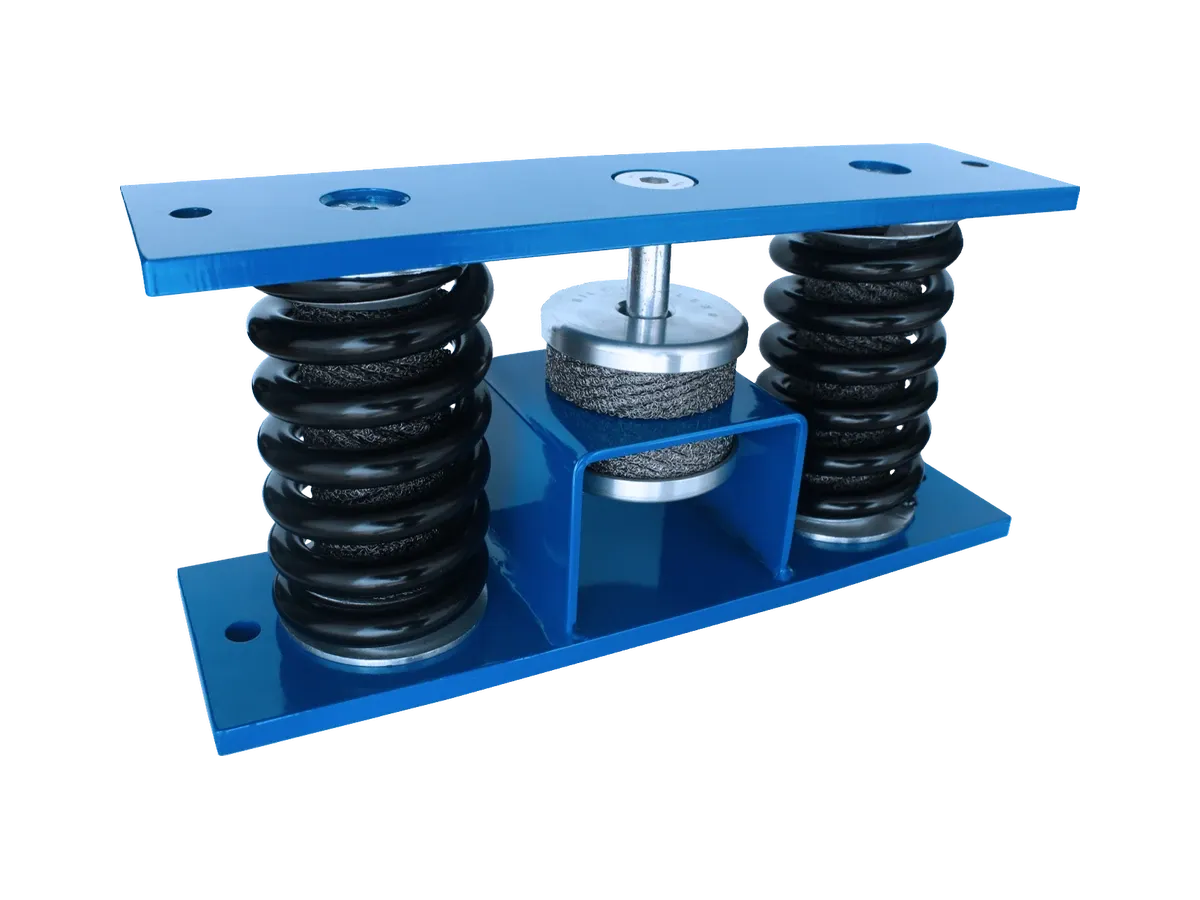
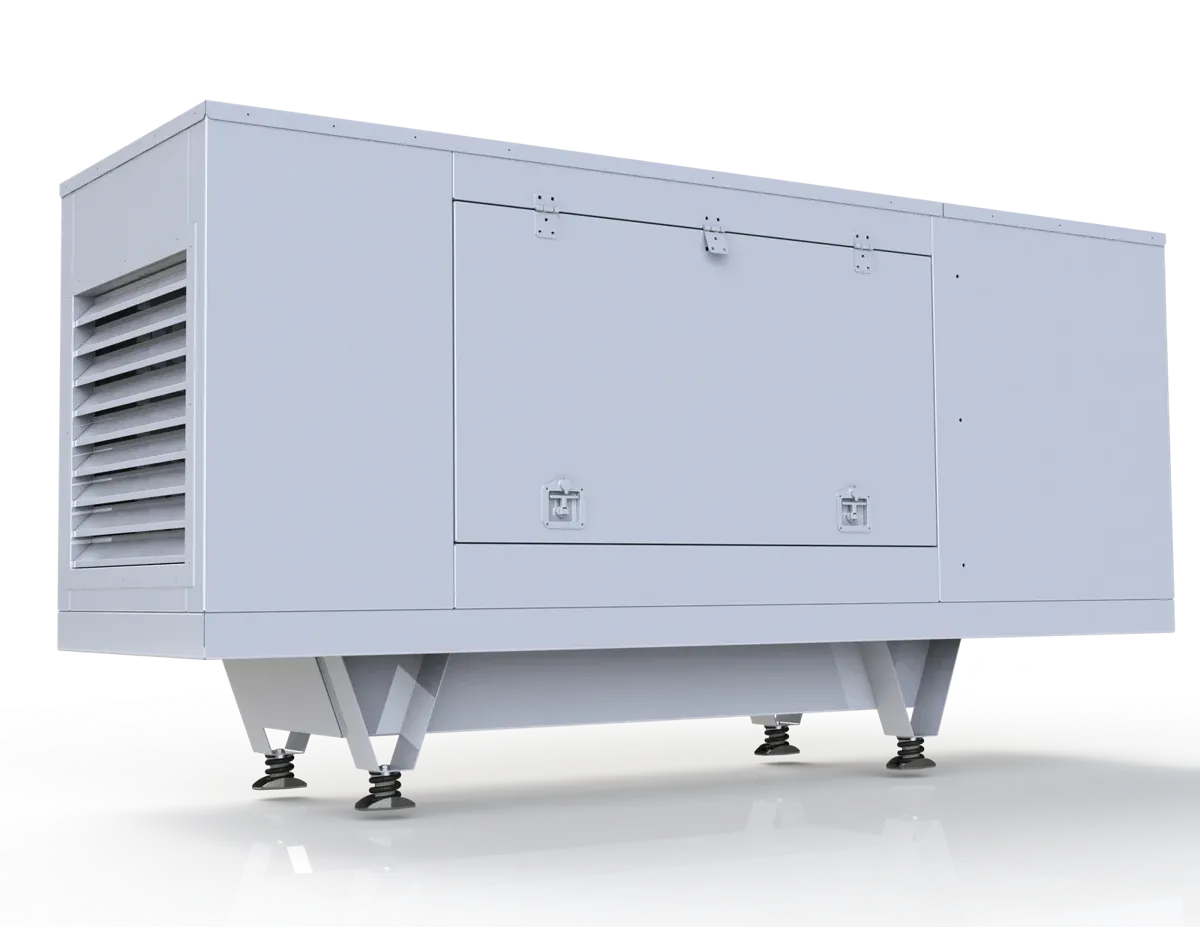
In May 2020 the independent laboratory VIRLAB (accredited by ENAC, no. 54/LE131) tested an 8-foot container (2400 × 2400 × 2200 mm) suspended on four Silentflex® Container Pads. Inside were two racks (600 × 1200 × 1800 mm) with IT equipment switched on at 220 V. Total mass: about 3216 kg.
The assembly went through the resonance search and the Zone 4 seismic test in X, Y and Z. Result, certificate 203058 C of 15 June 2020: the structure kept its integrity and the IT equipment stayed on during and at the end of the tests.
How the isolator does it
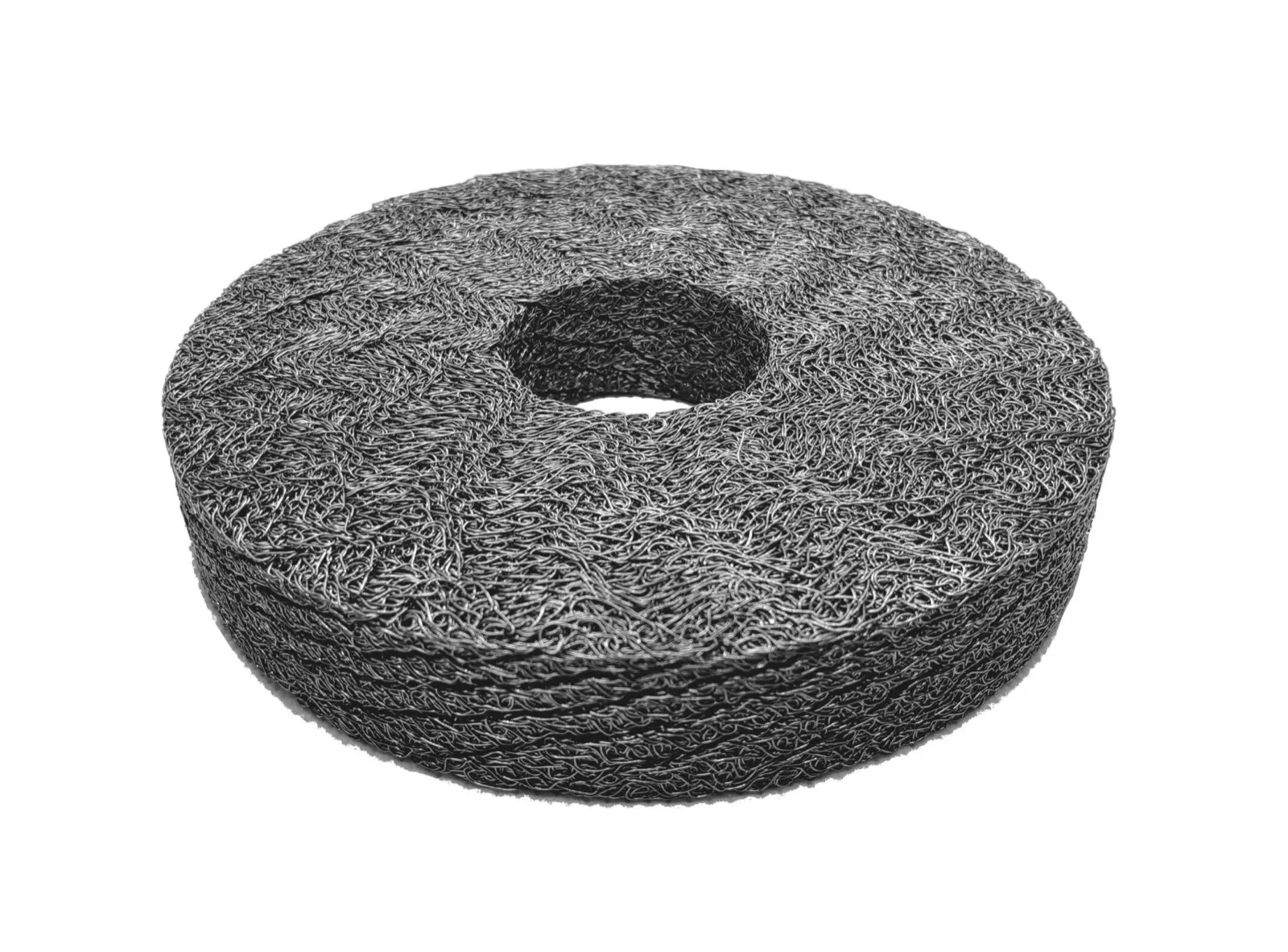
A Container Pad combines several steel springs with stainless steel wire mesh dampers:
- Low natural frequency in Z (3–9 Hz): the container is isolated from vibration coming through the floor, and more than 90% is attenuated above 20 Hz.
- High stiffness in X and Y plus lateral and vertical retentions: the load cannot walk off its mounts or lift off in a strong earthquake or wind.
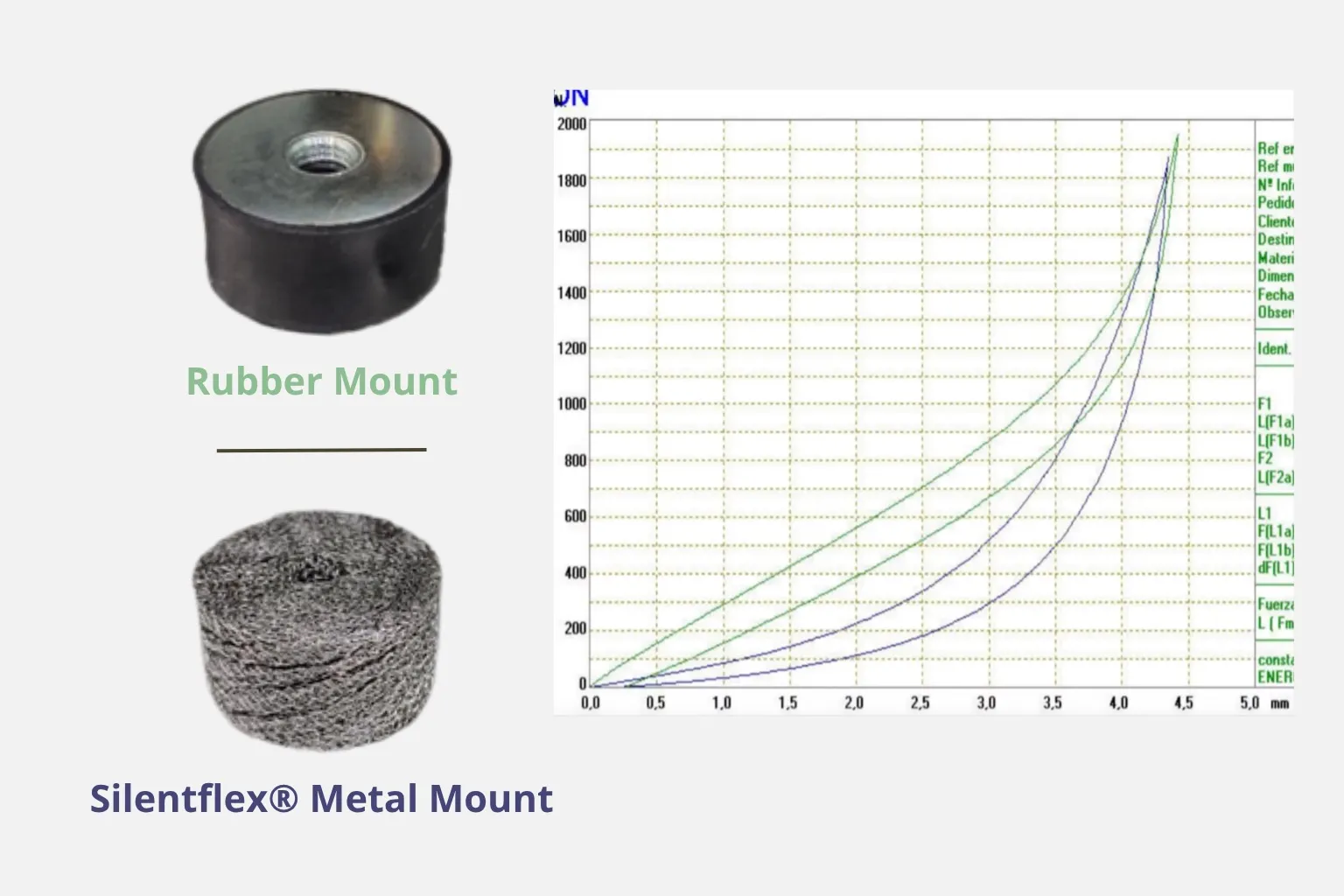
- Wire mesh dampers: they limit the amplification at resonance and stiffen progressively under overload, so the springs never block.
Vibration limits for IT
The ASHRAE TC 9.9 guidelines for datacom equipment centres, and tests by IBM on hard disks, put the tolerable acceleration for IT equipment in operation around 0.7 m/s². That is well below what a generator room or a busy road can transmit through a slab, which is why vibration isolation matters even far from seismic zones.
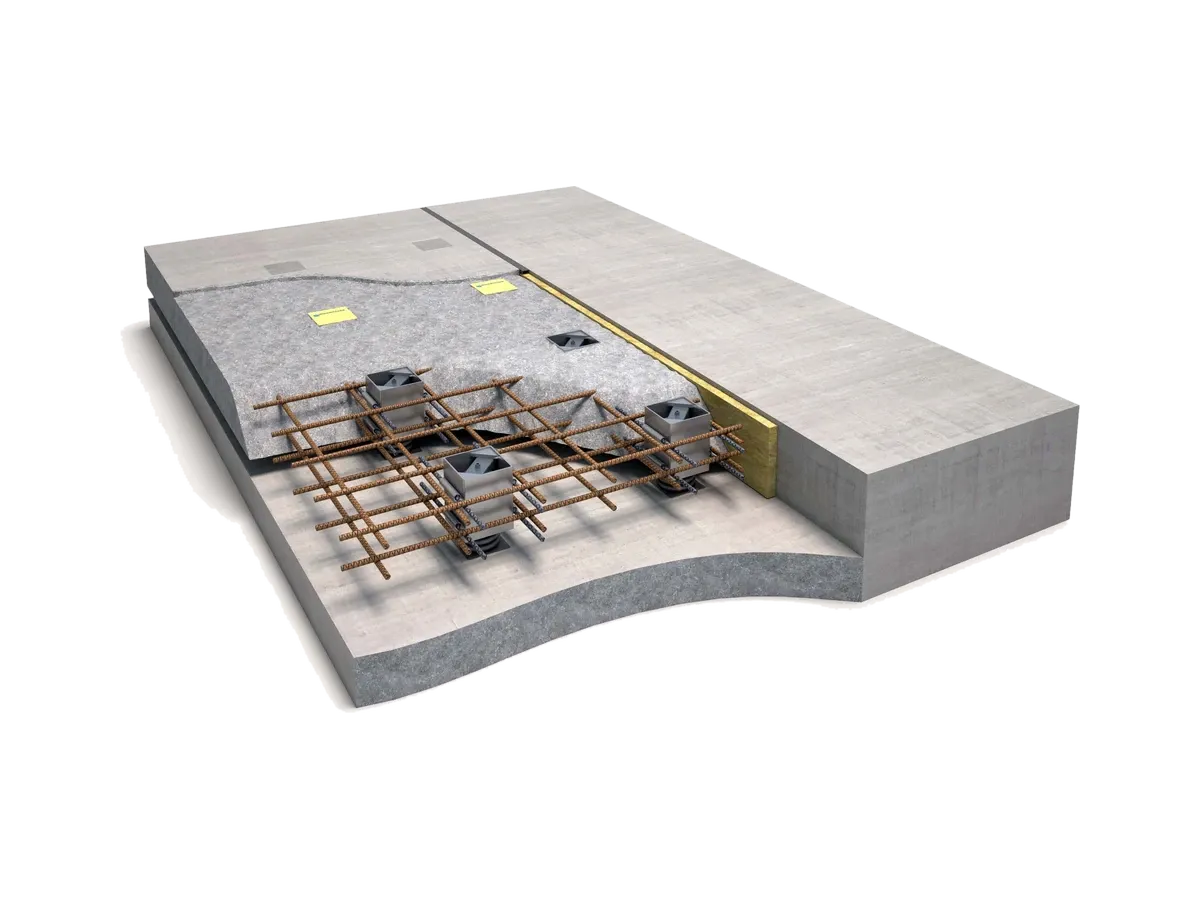
For whole rooms, the Silentflex® floating slab isolates the entire floor at 2.5–4 Hz. For individual cabinets and containers, the Container Pad and our double springs with retention are the usual choice. Ask us for the full test report or a selection for your site.