

Choosing an anti-vibration mount is not about picking the “strongest” or the “softest” one. A mount isolates only when its natural frequency is well below the frequency of the vibration it has to stop. Five questions lead to the right family and model.
1. What load does each mount carry?
Divide the total mass of the machine, including fluids and accessories, by the number of mounts:
Load per mount = total mass ÷ number of mounts
A 600 kg compressor on 4 mounts puts 150 kg on each. If the centre of gravity is not in the middle, the mounts on the heavy side carry more: size them for the heaviest point. Every Silentflex® datasheet gives a minimum and maximum static load per model; your load should sit inside that range, ideally not at either end.
2. At what frequency does the machine vibrate?
For rotating machines, the main excitation is the running speed:
f (Hz) = rpm ÷ 60
| Machine | Speed | Excitation |
|---|---|---|
| 4-pole motor, fan, pump | 1450 rpm | 24.2 Hz |
| 2-pole motor, pump | 2900 rpm | 48.3 Hz |
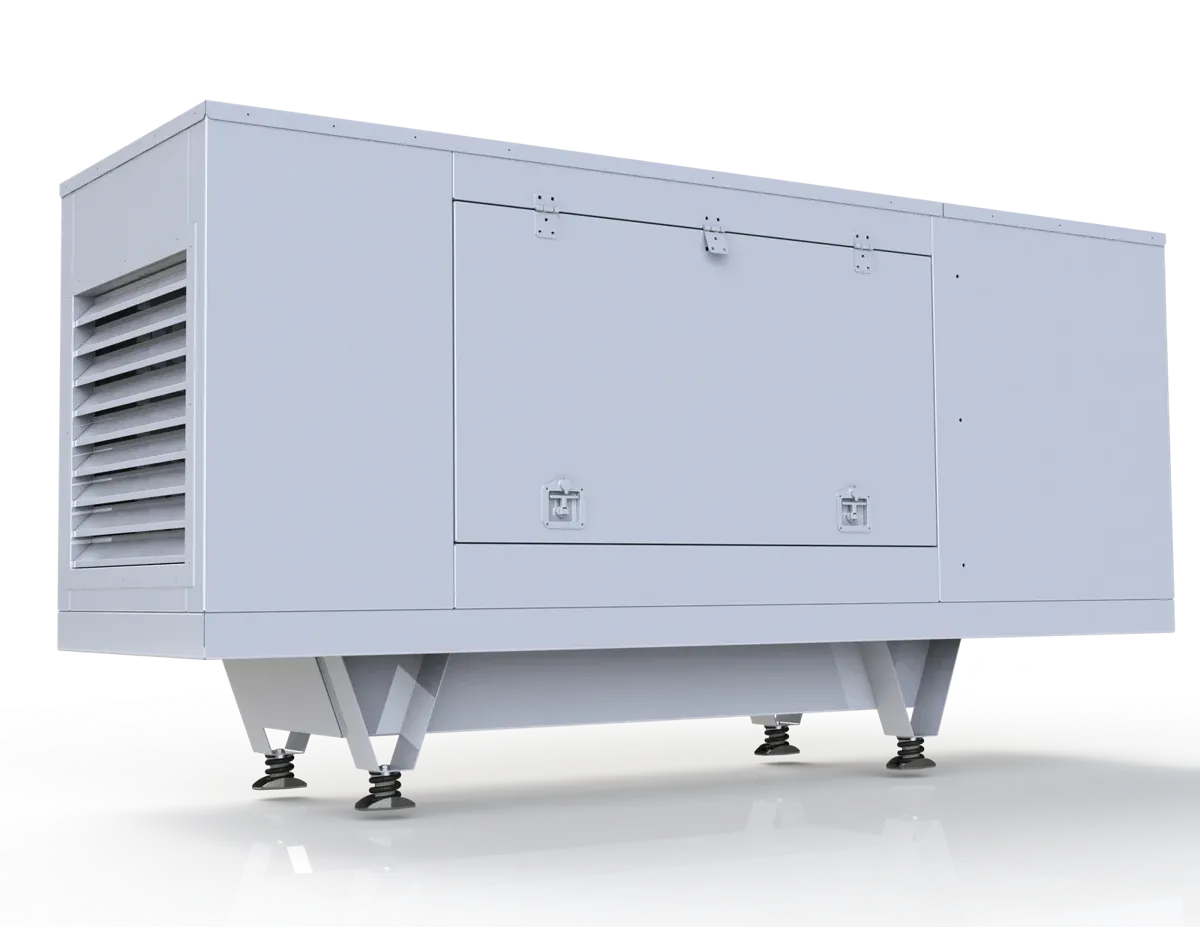
| Diesel generator set | 1500 rpm | 25 Hz |
| Transformer (50 Hz grid) | – | 100 Hz hum |
Always take the lowest frequency the machine runs at, including start-up if it spends time there.
3. Which natural frequency do you need?
The share of vibration a mount lets through is its transmissibility T. Isolation is 1 − T. For a lightly damped mount, the natural frequency that gives a target isolation is:
fn = f ÷ √(1 + 1/T)
For 90% isolation (T = 0.1) that is f ÷ 3.32. For 95% (T = 0.05) it is f ÷ 4.58.
Example: a 1450 rpm fan (24.2 Hz) needs mounts at 7.3 Hz or less for 90% isolation. A metal wire mesh mount at 15–25 Hz would not do it; a spring mount at 5–9 Hz would.
Two rules to keep in mind:
- Never place the natural frequency close to the excitation. Between f/√2 and f·√2 the mount amplifies vibration instead of reducing it. That is the “region to avoid” in our calculator chart.
- A lower natural frequency means a larger static deflection: δ (mm) ≈ 248.4 ÷ fn². At 7.3 Hz the mount compresses about 4.7 mm under load. Check that pipes, cables and couplings can follow.
4. What does the environment demand?
The elastic element sets the limits:
| Isolating element | Typical temperature range (Silentflex® datasheets) |
|---|---|
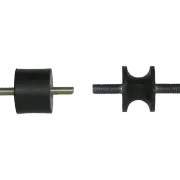
| Natural rubber | −20 to +80 °C |
| Silicone | −50 to +200 °C |
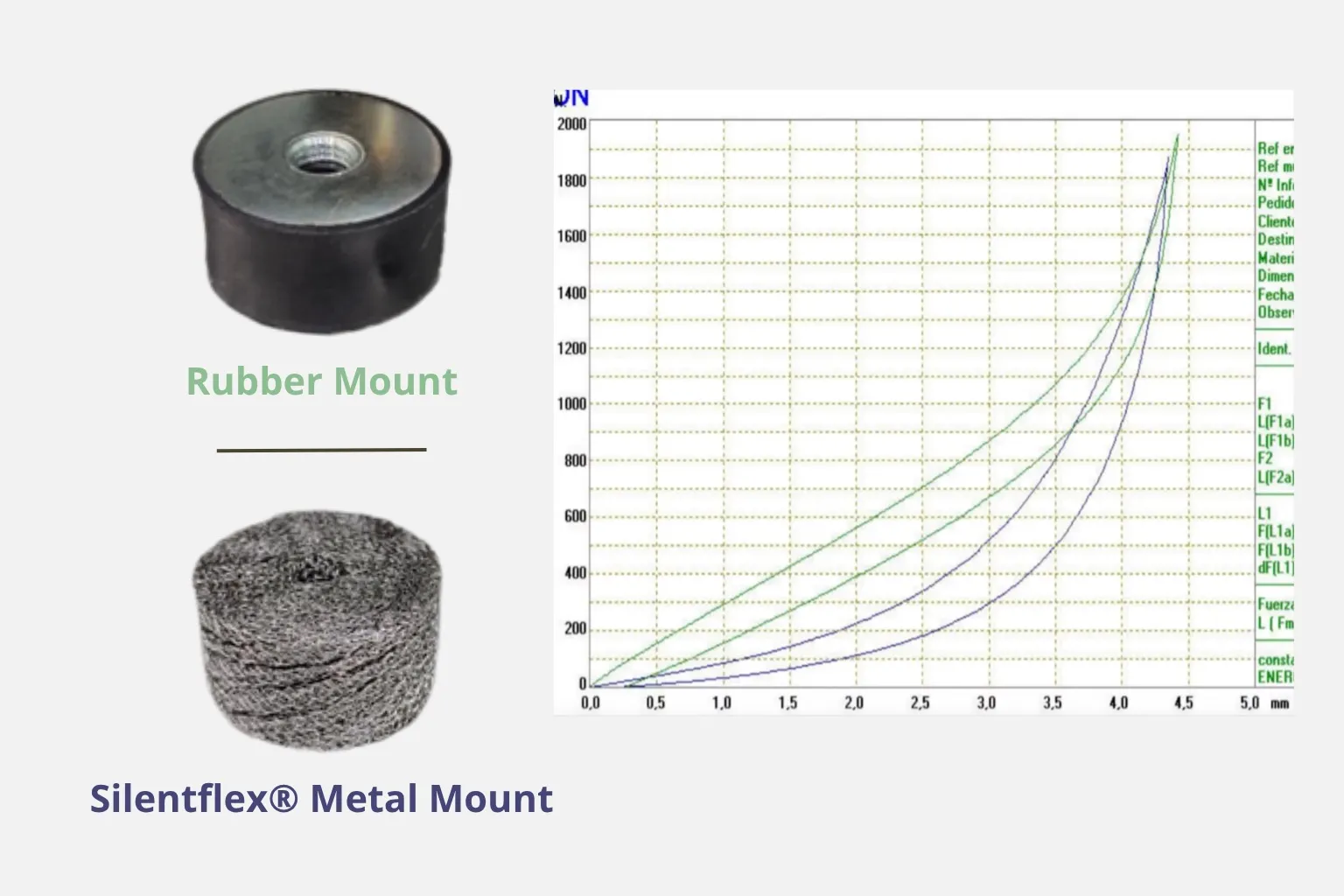
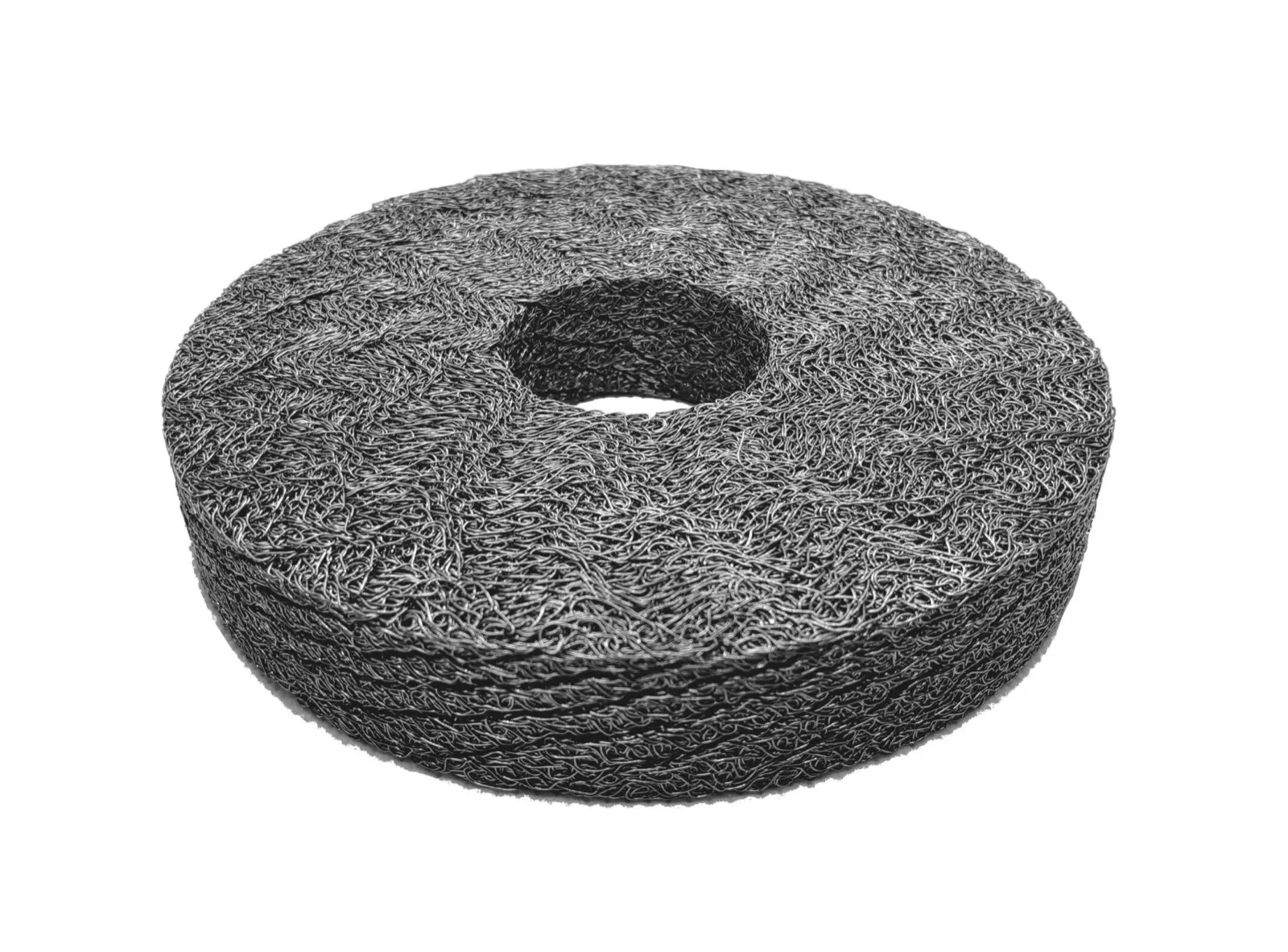
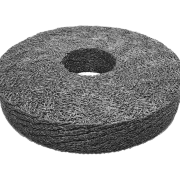
| Stainless steel wire mesh, springs, wire rope | −70 to +300 °C, some models +500 °C |
Oil, ozone, UV, salt spray and heat age elastomers. All-metal mounts are not affected, which is why they are chosen for engines, exhausts, outdoor equipment, ships and defence.
5. How is the mount loaded?
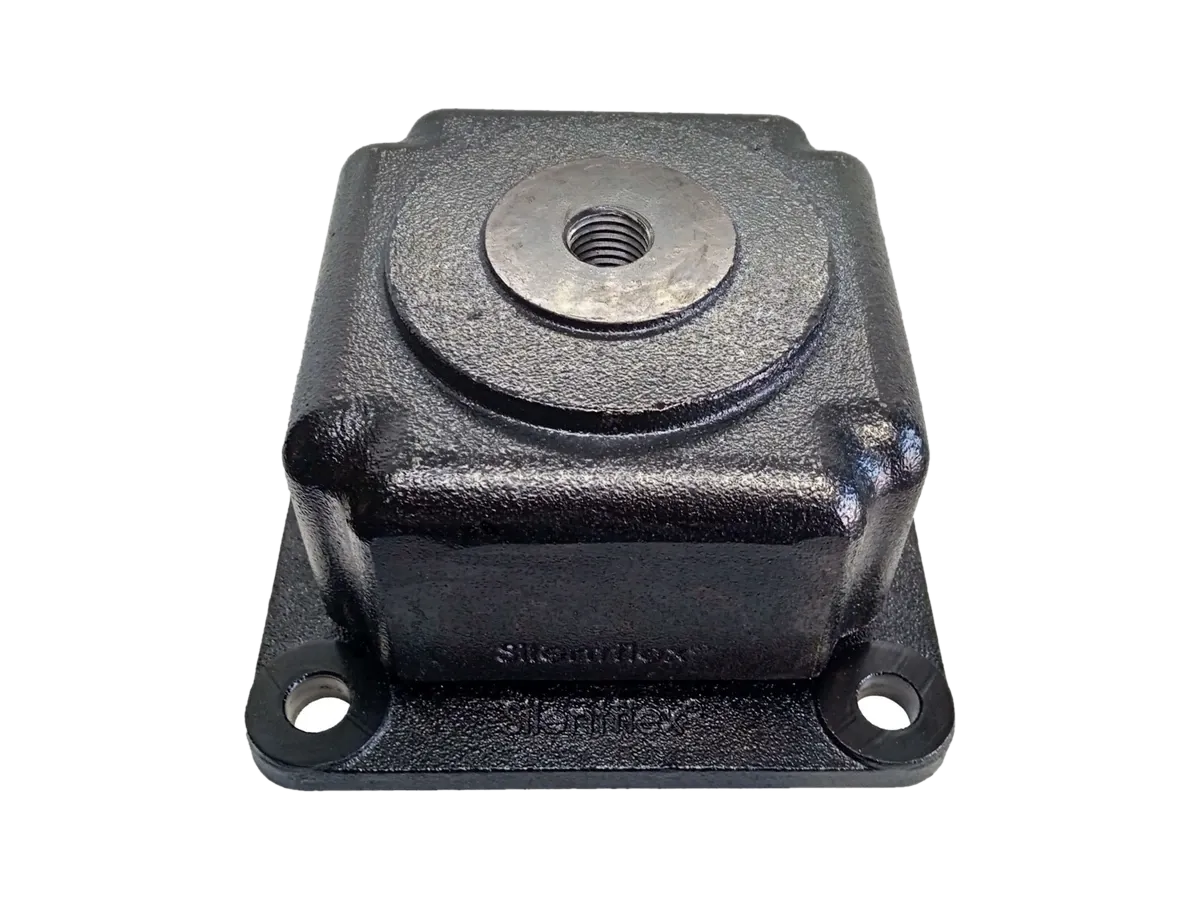
Most machines stand on their mounts (compression). Some equipment hangs (tension), sits on a wall (radial) or moves with a vehicle (all directions plus shock). Check the datasheet for the load and dynamic force in each direction: several Silentflex® models, such as the 954412, S402 or Axial Inox, work in compression, tension and radial.
Damping: why it matters at start-up
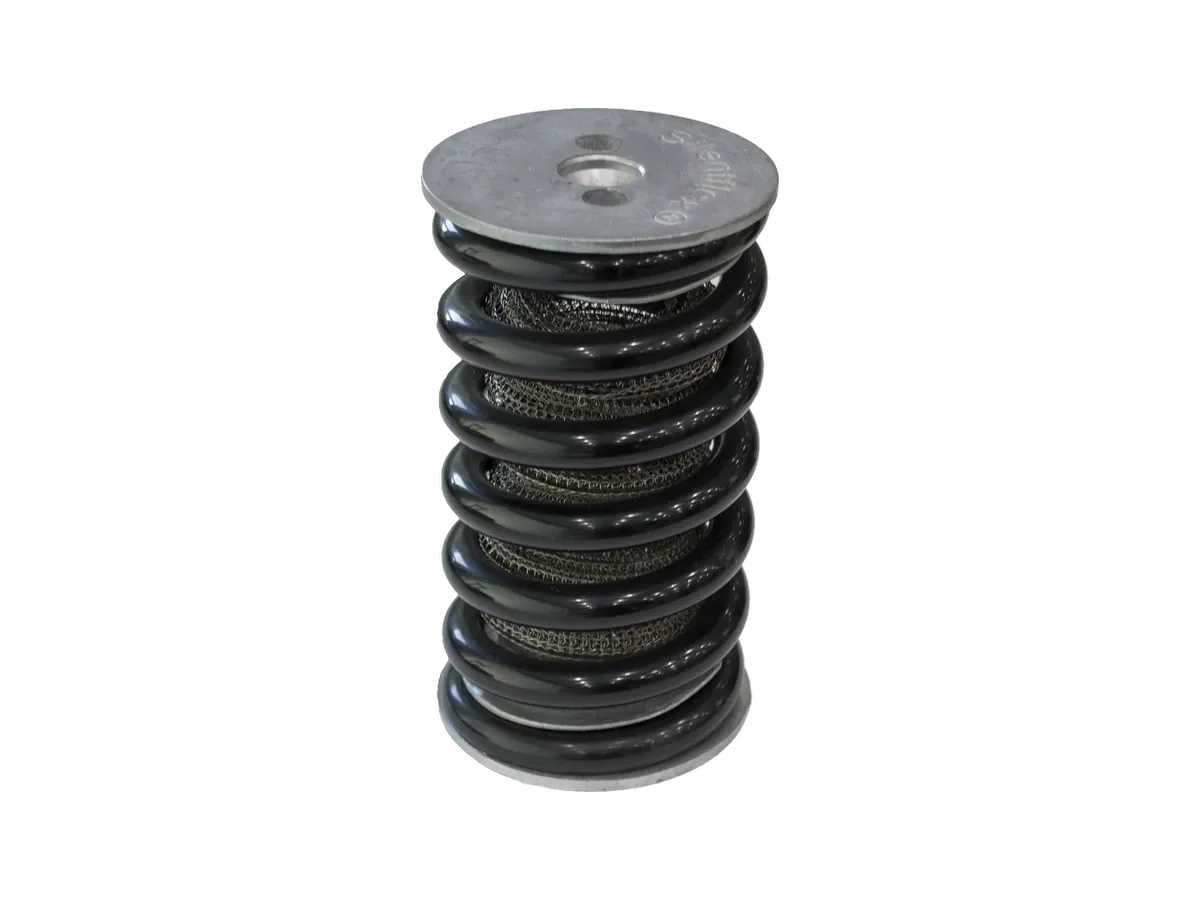
Every machine passes through the mount’s natural frequency when it starts and stops. Damping limits the amplification at that moment. Stainless steel wire mesh mounts keep amplification at resonance below 4 to 6 depending on the model (Silentflex® datasheets), while a bare steel spring barely damps. That is why Silentflex® springs carry a wire mesh cushion inside.
Put it to work
Our vibration calculator runs these five steps for you and shows which families fit your machine. If the numbers are unusual, an engineer can review them: send your calculation directly from the calculator.