




Description
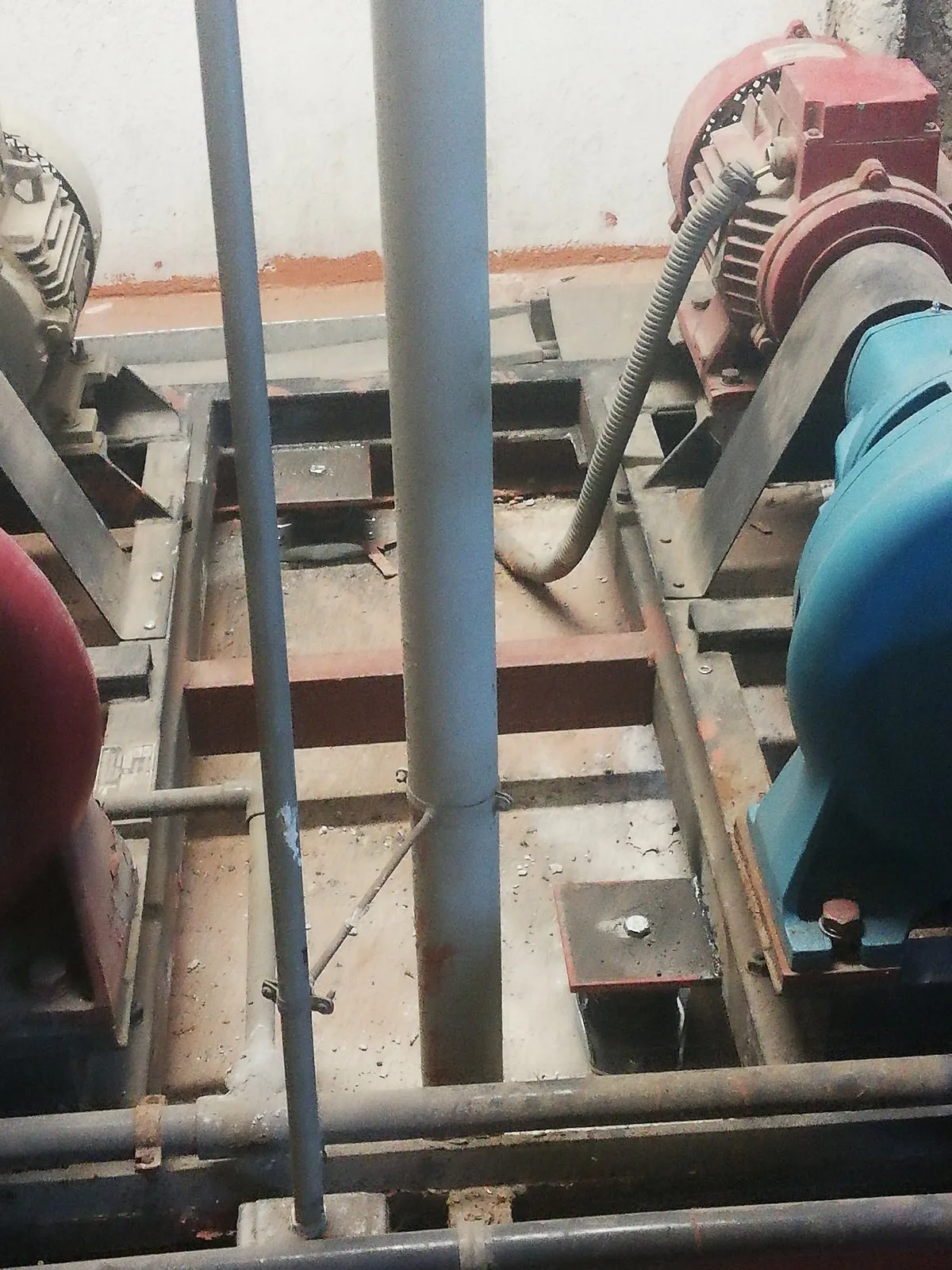
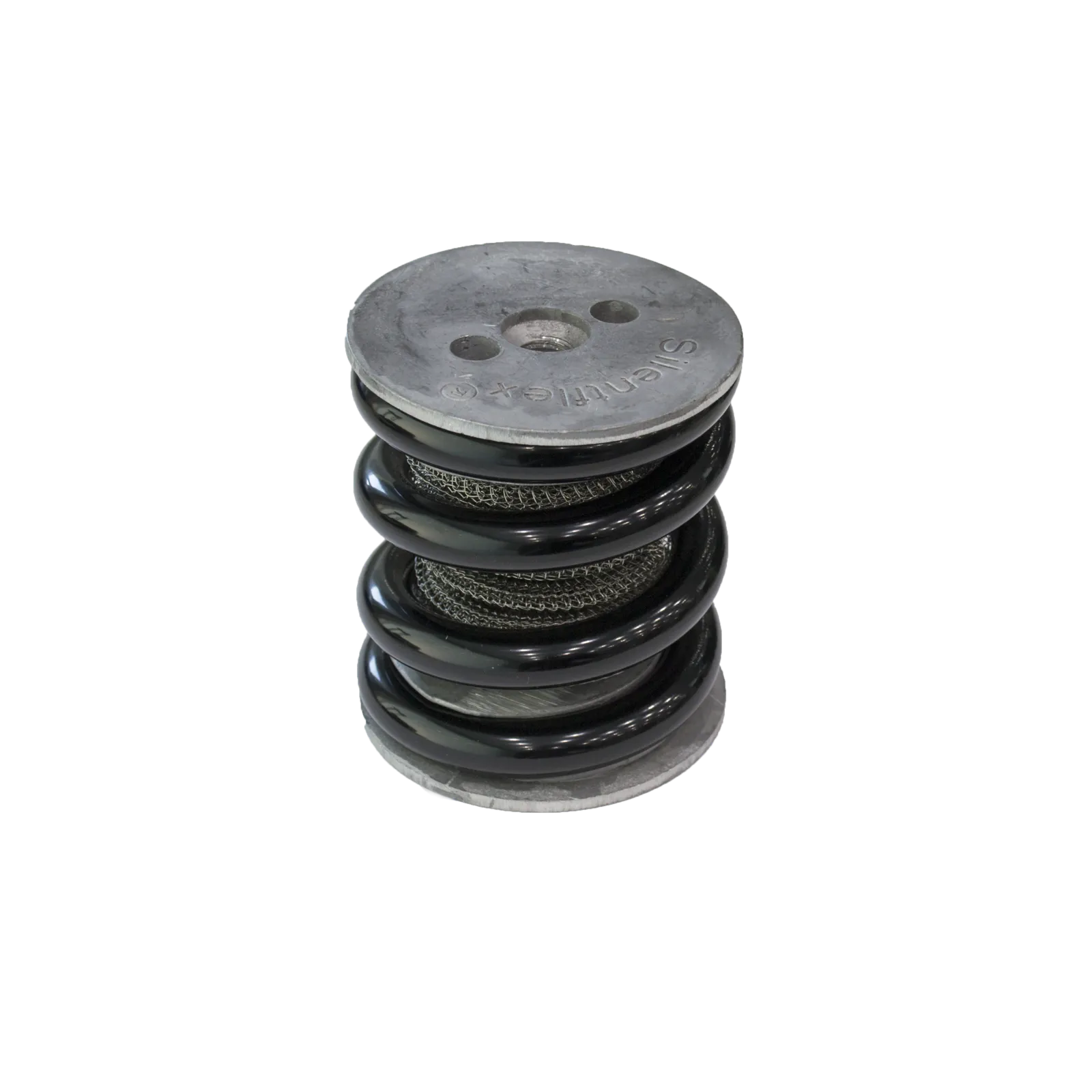
Silentflex® anti-vibration single springs
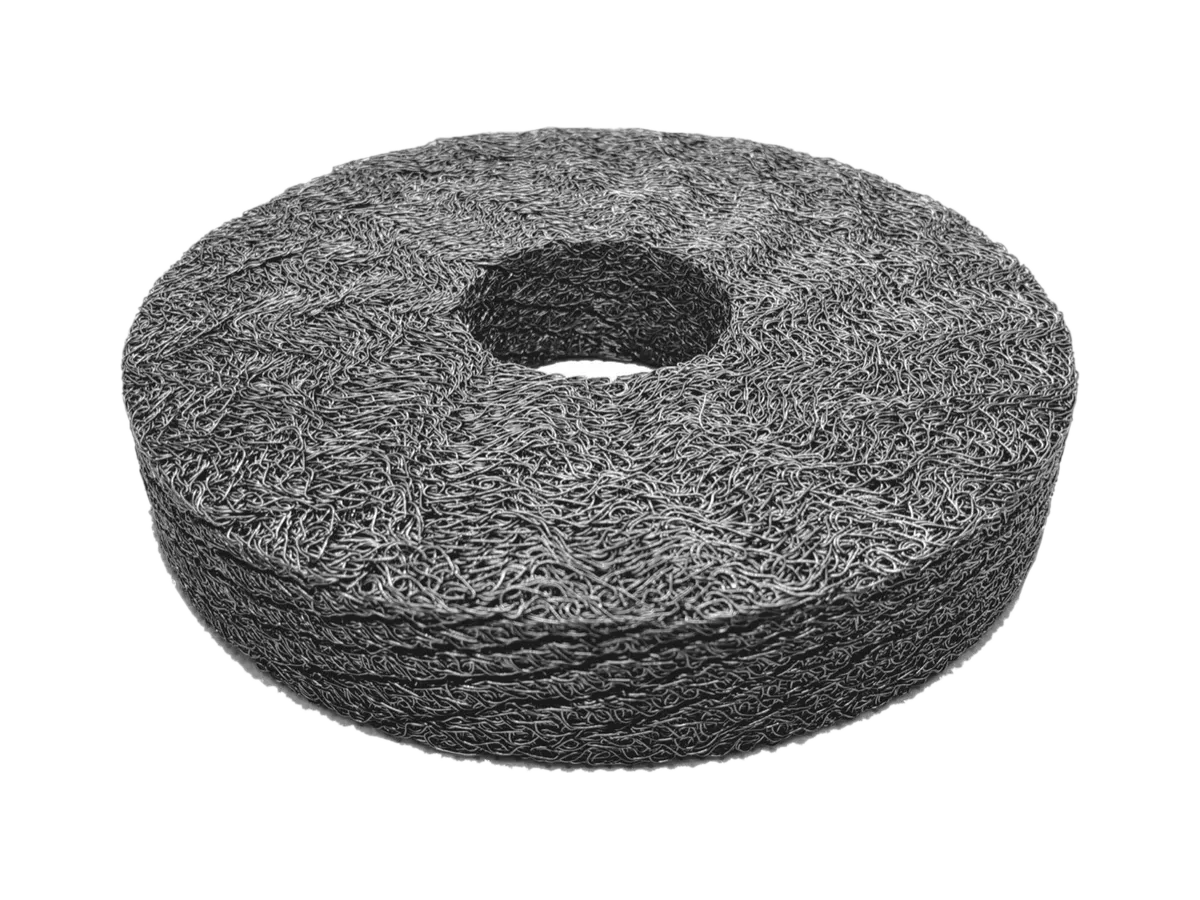
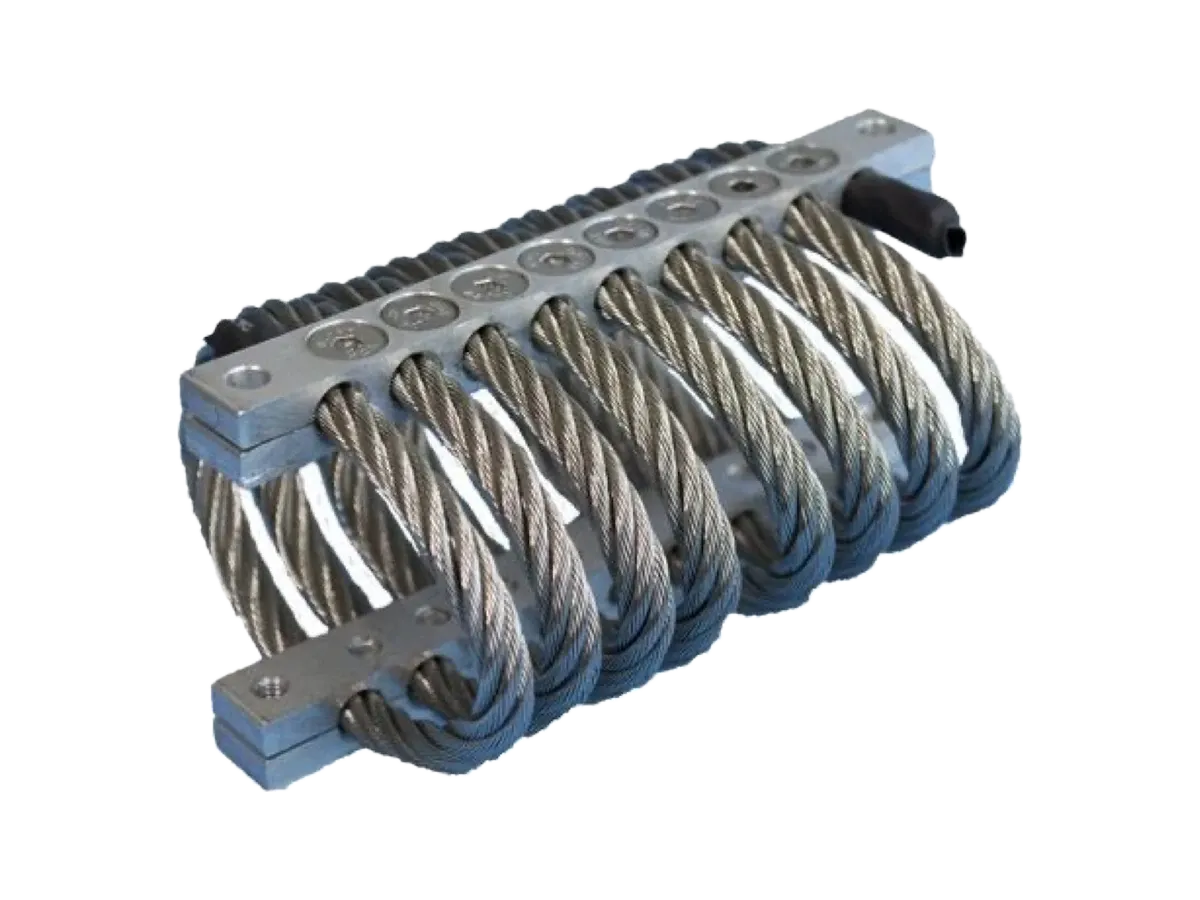
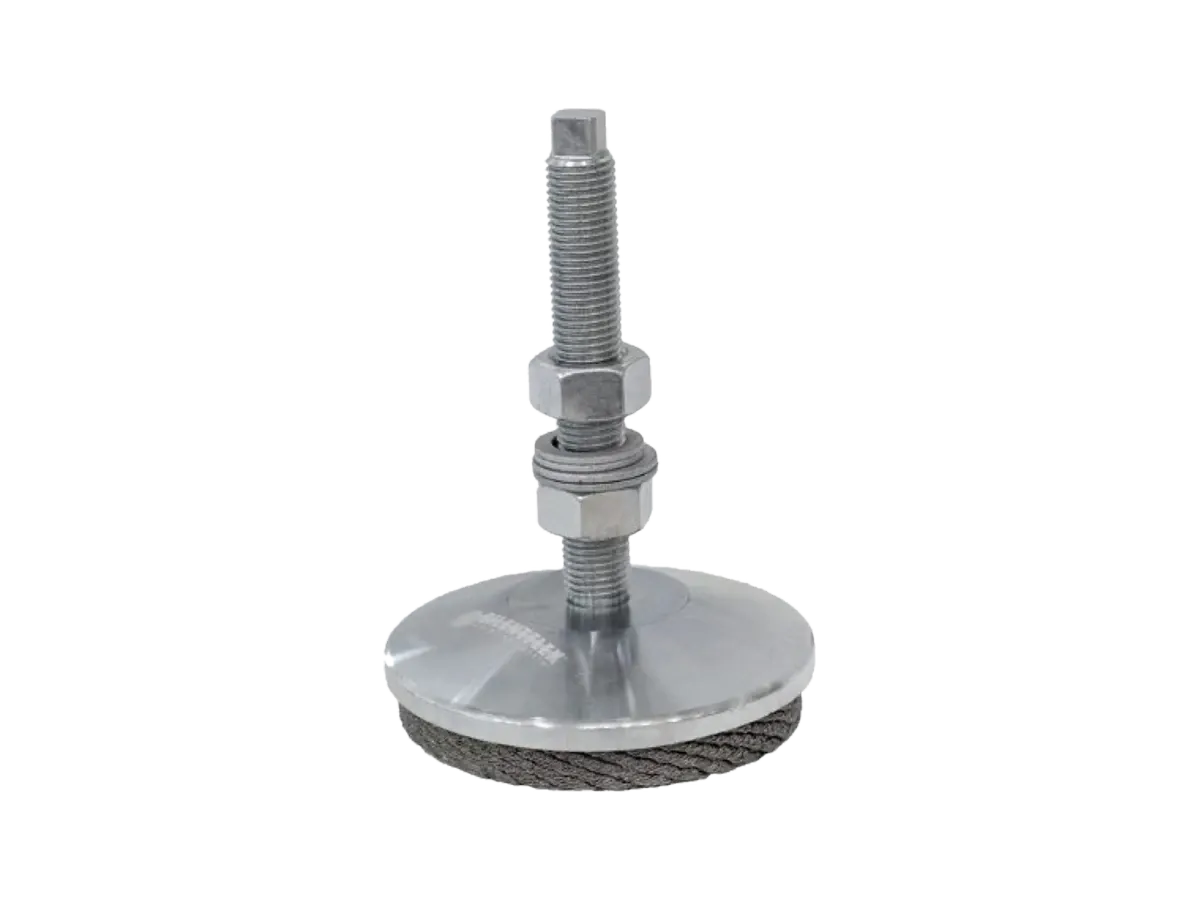
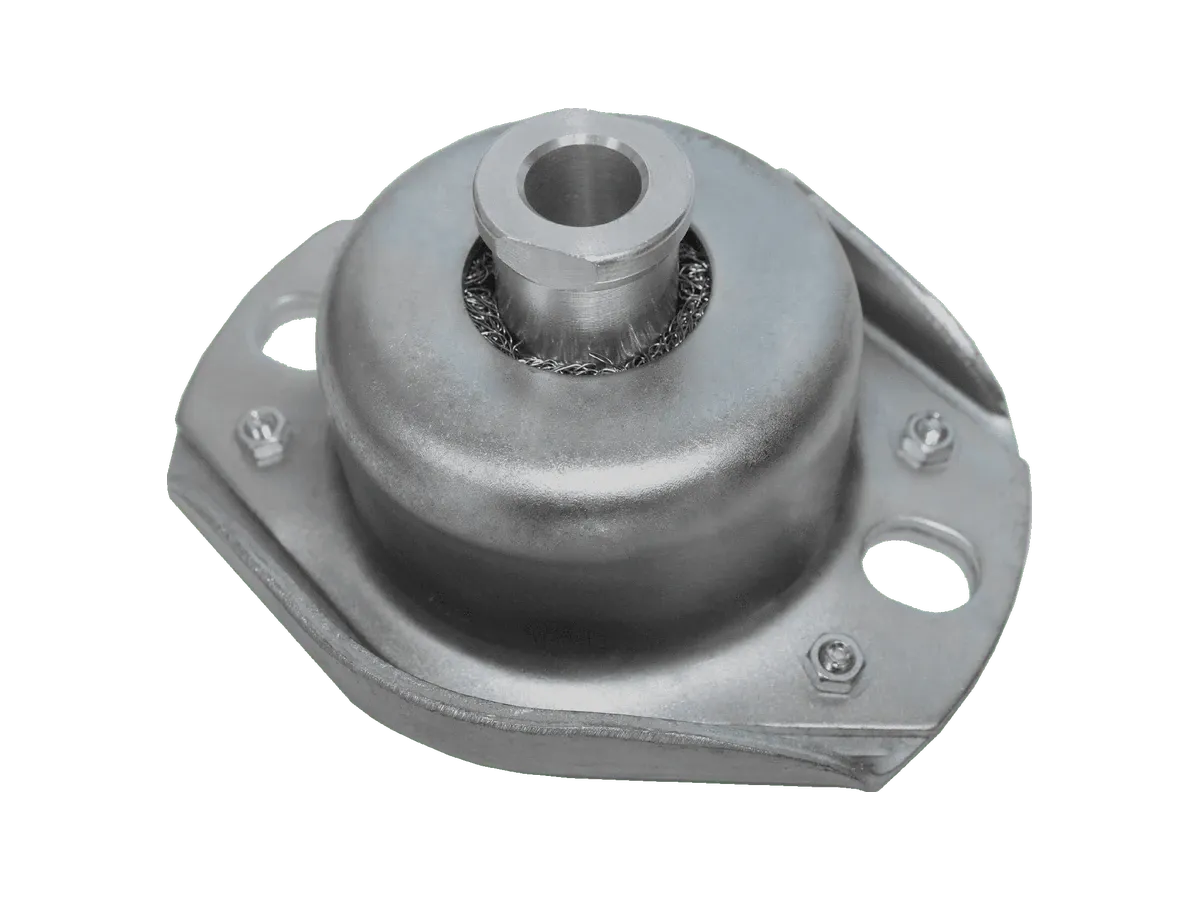
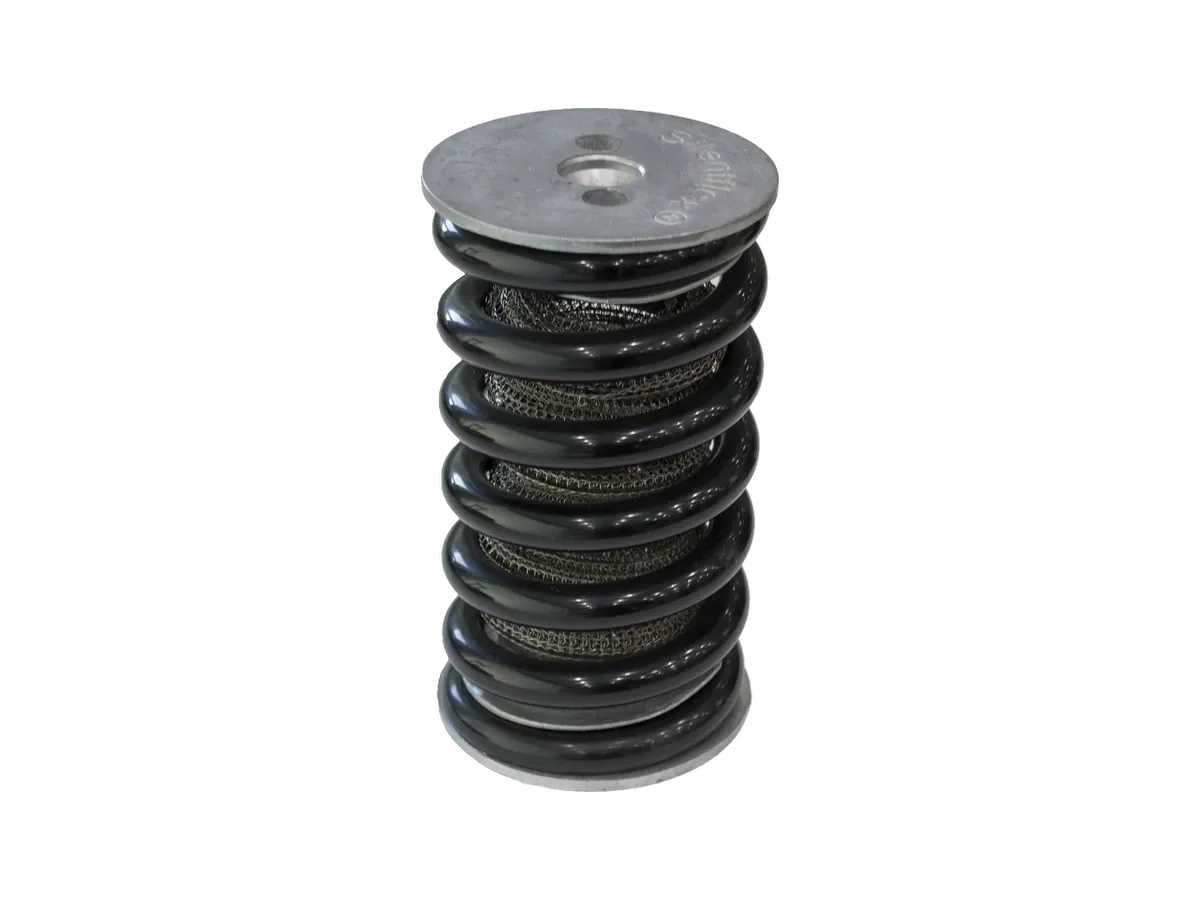
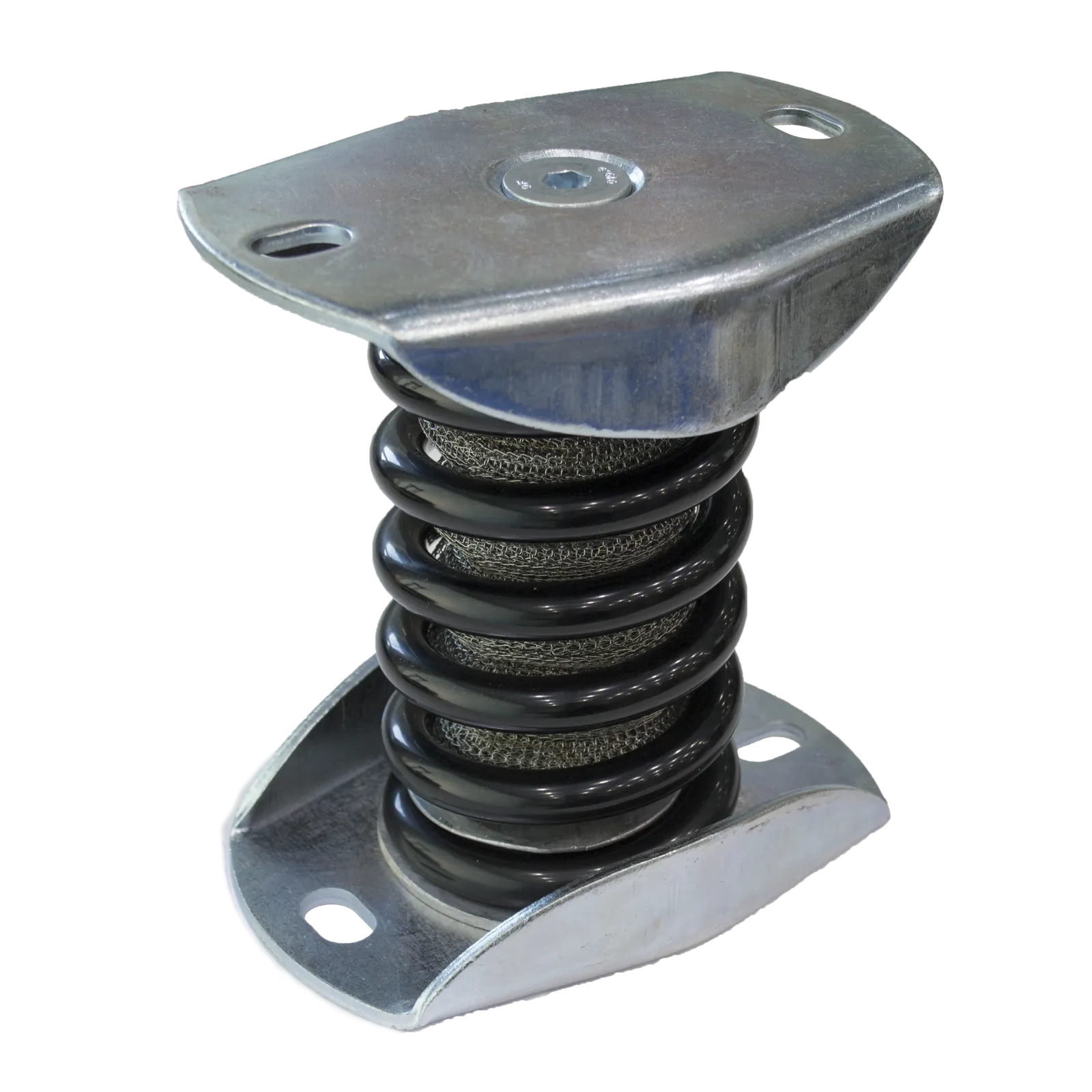
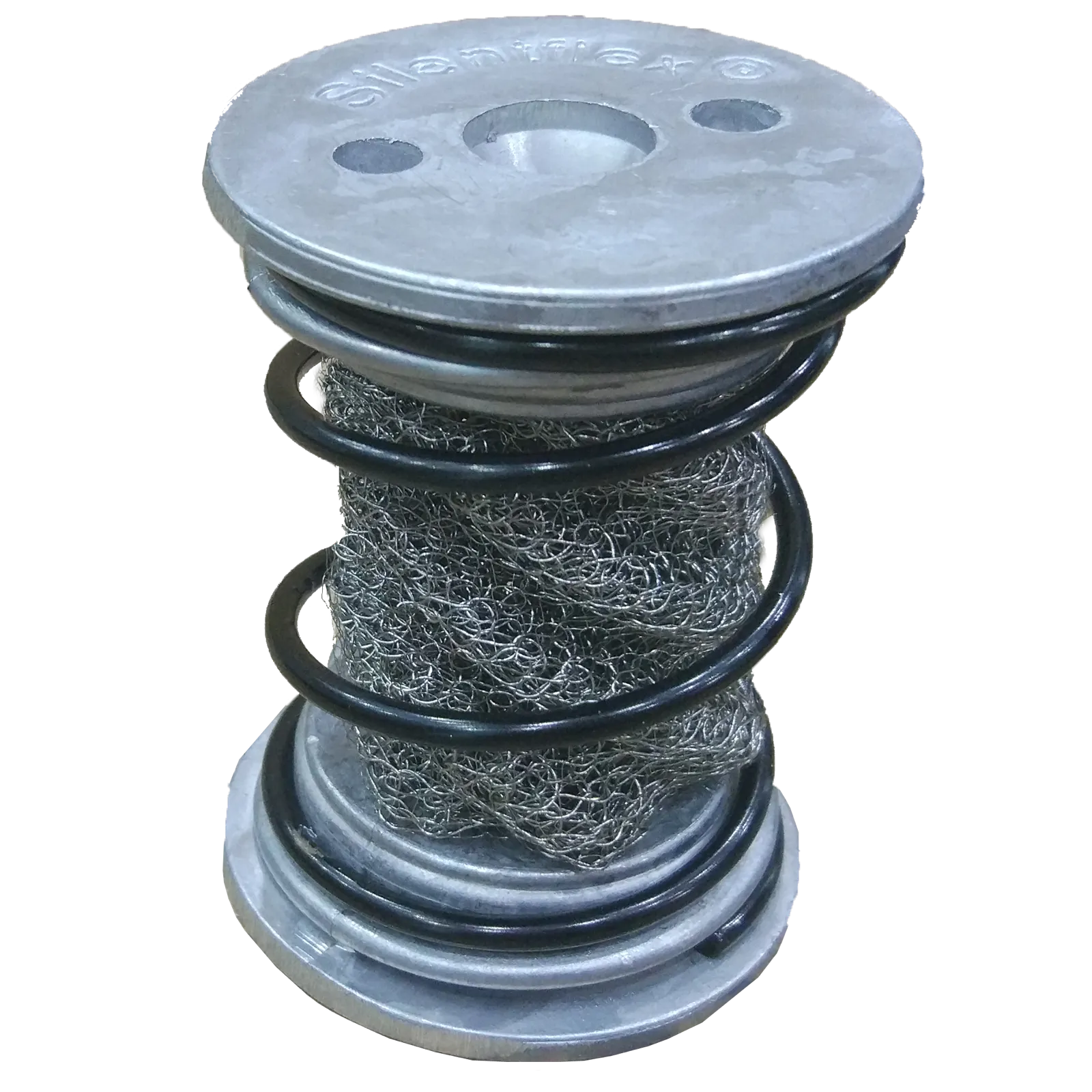
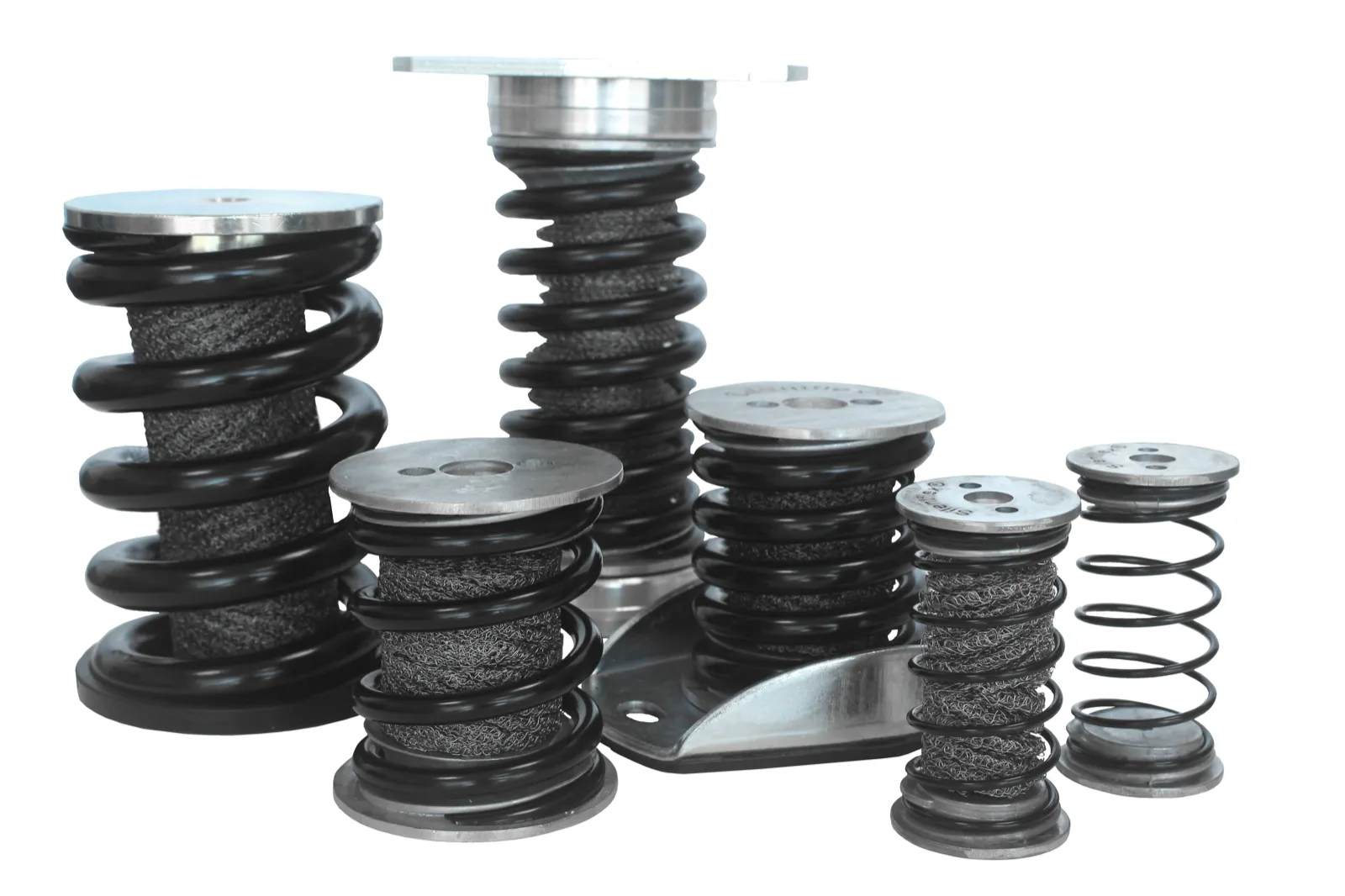
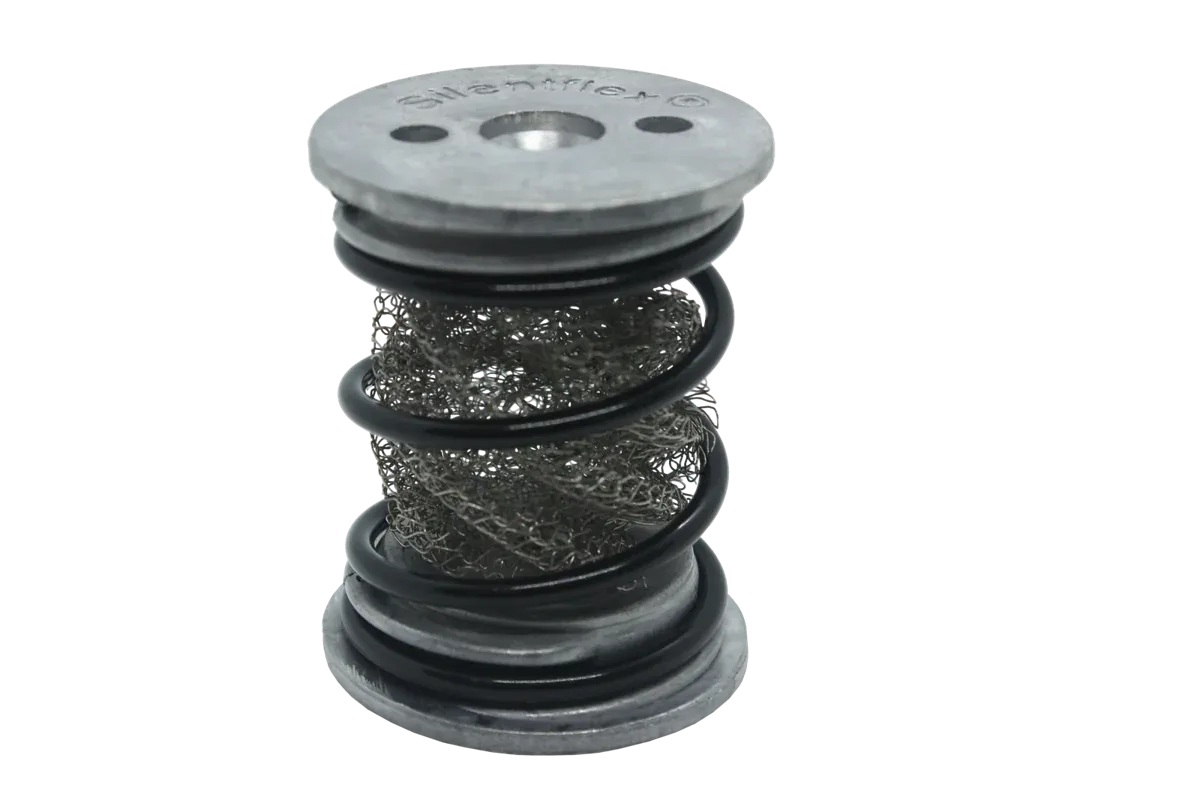
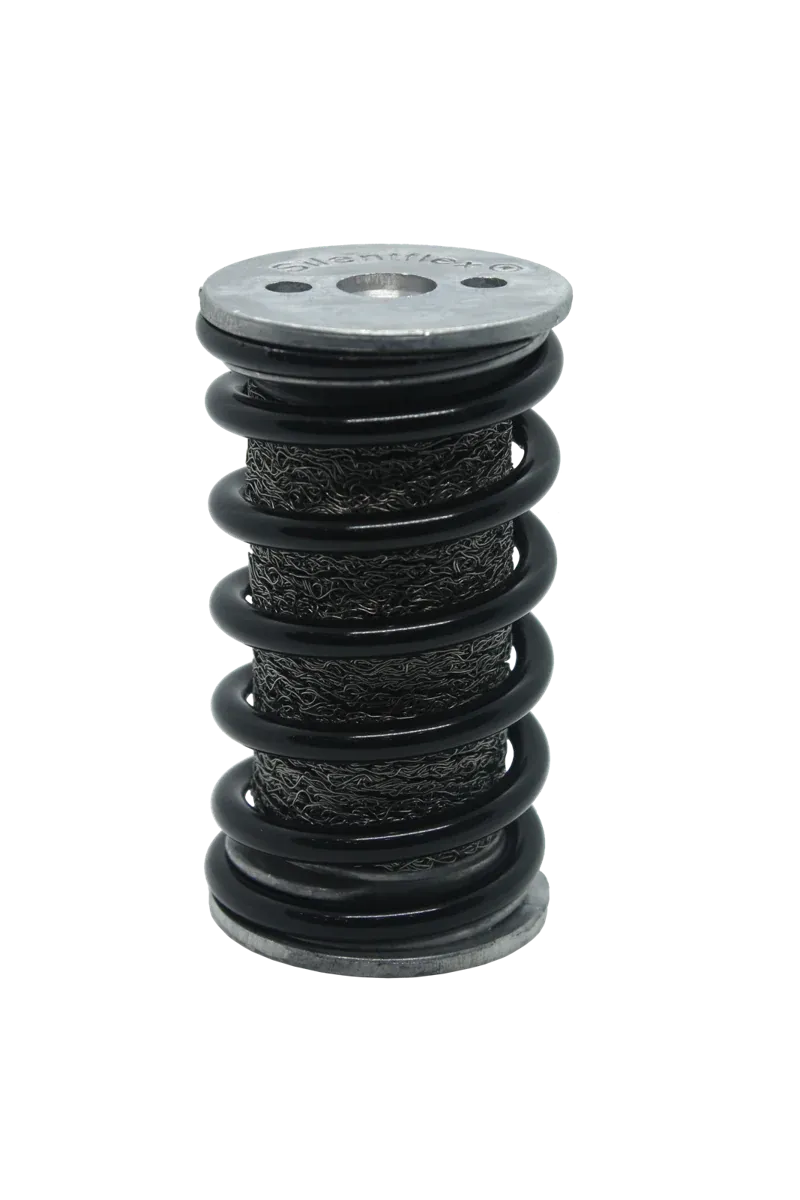
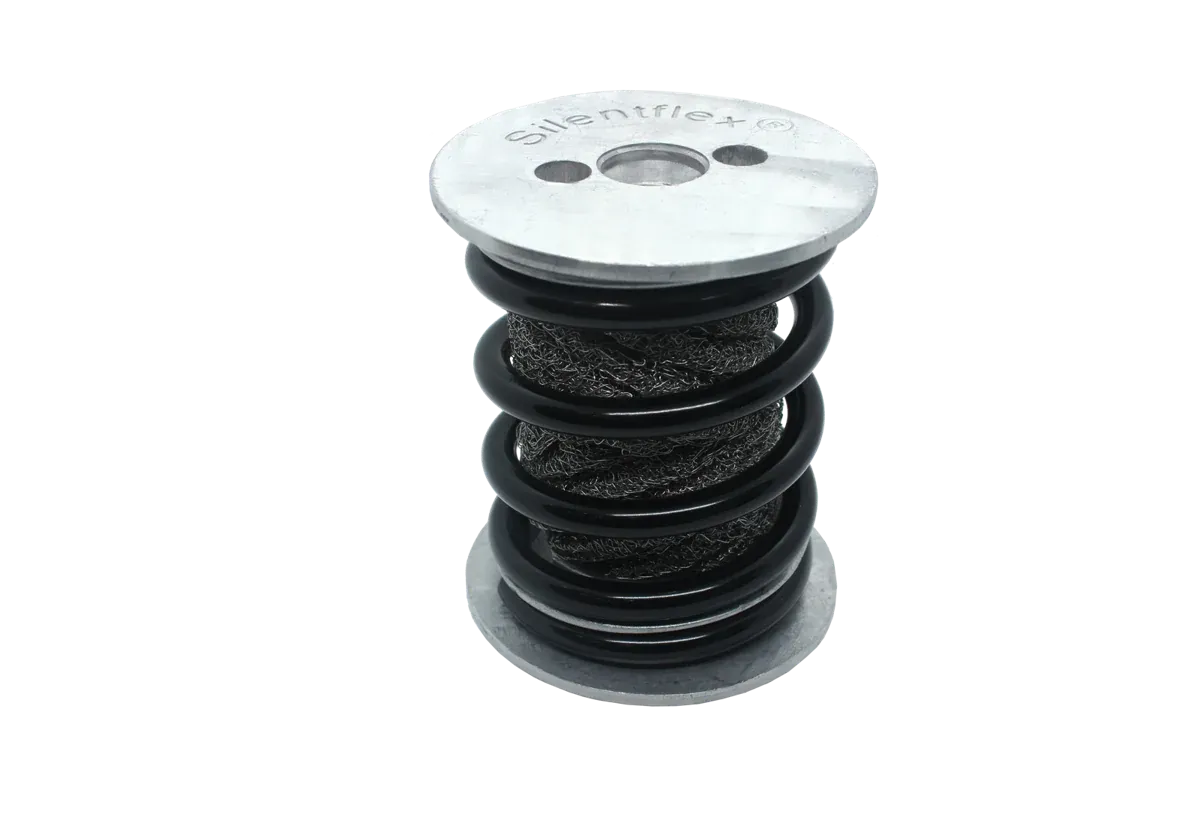
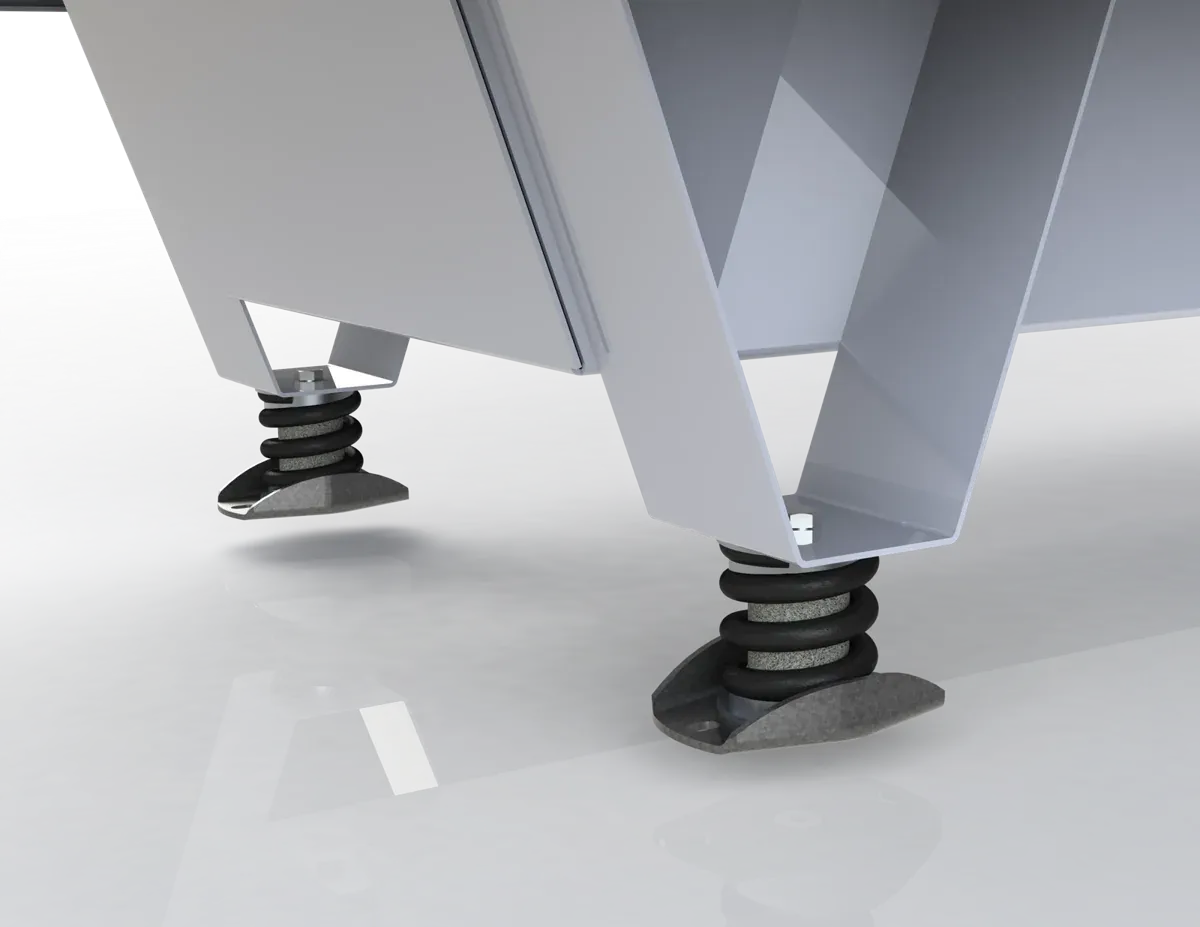
Silentflex® single springs (also called spring mounts) isolate low-frequency machines: they have a natural frequency of 3 to 9 Hz and carry 5 to 730 kg per spring. Each one has a high-strength steel spring with a stainless steel mesh cushion inside that dissipates the vibration energy.
They are easy to install between the floor and the machine thanks to their two threaded caps and one or two fixing soles.
How it works
The spring gives the low natural frequency that makes it possible to isolate slow machines. The metal cushion inside dampens and adds progressive stiffness: it slows the spring down as the load rises and stops it from bottoming out (anti-blocking system).
For medium and high vibrations (above 20 Hz) attenuation exceeds 90%. Isolation is stable over a wide load range, and they are designed for unlimited service life at the rated load.
Technical data
- Static load: 5–730 kg per spring
- Natural frequency: 3–9 Hz, depending on the series
- Working temperature: −70 to +300 °C
- Fixing: M8 or M12 thread · option with one sole (S) or two soles (SS)
- Materials: 52CrMoV4 steel spring (EN 10089), shot-peened with zinc phosphate · AISI 304 stainless steel mesh cushion · aluminium caps · zinc-plated or painted steel soles
References
| Series | Natural frequency | Load per spring | Free height | Base | Thread |
|---|---|---|---|---|---|
| 954057 | 7–9 Hz | 6–75 kg | 59 mm | 90 × 60 mm | M8 |
| 954058 | 5–6 Hz | 5–50 kg | 59 mm | 90 × 60 mm | M8 |
| 954059 | 3–4 Hz | 5–50 kg | 88 mm | 90 × 60 mm | M8 |
| 954060 | 7–9 Hz | 25–730 kg | 88 mm | 140 × 100 mm | M12 |
| 954061 | 5–6 Hz | 20–560 kg | 88 mm | 140 × 100 mm | M12 |
| 954062 | 3–4 Hz | 75–550 kg | 142 mm | 140 × 100 mm | M12 |
| 954063 | 4–5 Hz | 98–715 kg | 142 mm | 140 × 100 mm | M12 |
Each series has 6 to 8 references depending on the load (for example, 954060-00 to 954060-07). The free height shown is without sole; with a sole it is a few millimetres higher.
Tested in our laboratory
We have tested the springs in the laboratory, with load–deflection curves and natural frequency against load.
Why metal
- They resist chemicals, corrosion, extreme temperatures, sunlight and fire.
- Fully suitable for outdoor use.
- The metal cushion does not age like rubber and keeps its properties.
Applications
They are widely used in industry to isolate fast-running (3000/1500 rpm) and slow-running (400 rpm) machines, all kinds of rotating machinery and sensitive electronic equipment:
- Motors, pumps, fans and compressors
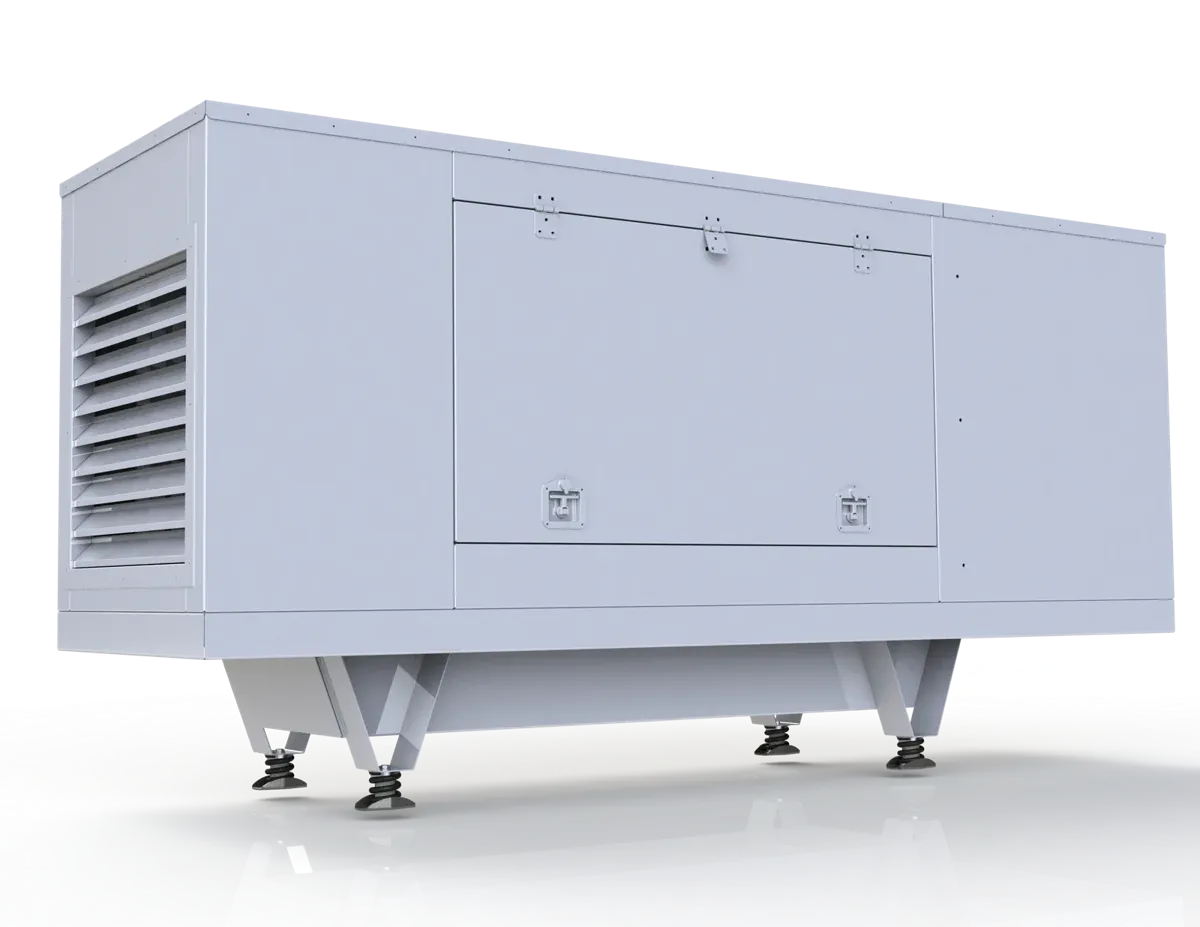
- Electrical transformers and generator sets
- Vibrating screens and vibratory feeders
- Textile machines
- Boilers and chillers
- Laboratory equipment
Frequently asked questions
Which series should I choose? It depends on the machine speed. The slower it runs, the lower the natural frequency has to be: for the slowest machines, the 3–4 Hz series (954059 and 954062); for faster machines, the 7–9 Hz series (954057 and 954060). Use our vibration calculator or tell us the load and the rpm.
What happens if it is overloaded? The metal cushion inside adds progressive stiffness and stops the spring from bottoming out.
Custom manufacturing
If no reference fits your load, your space or your fixing, we design the spring to measure.