


Telecoms
Racks, cabinets and UPS units in data centres and telecom rooms, protected against vibration, shocks and earthquakes.
Points on the drawing
Simulate it
Vibration reaching the servers
Everyday vibration (generators, traffic, works) reaches the racks through the floor and, over the years, wears the disks.
Vibration made audible.
Acceleration on this floor
– g
0 gGR-63-CORE Zone 4 test level: 1.65 g2 g
Tested with 1,700 kg of racks to GR-63-CORE Zone 4: in an earthquake they keep the racks anchored and connected.
The animation is illustrative and exaggerated.
See it working
A 900 mm high seismic plinth under a pair of operating server racks (1,500 kg), on a shake table to Telcordia GR-63-CORE Zone 4 (test report 213218, Virlab).
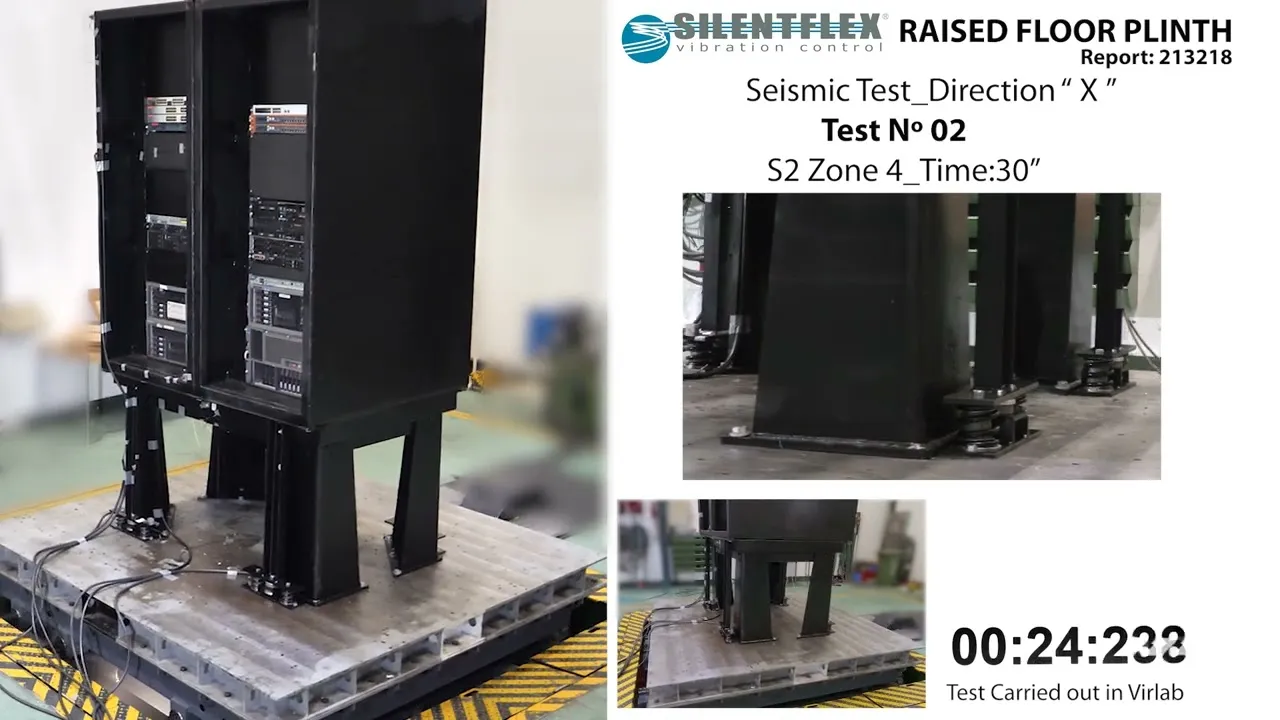
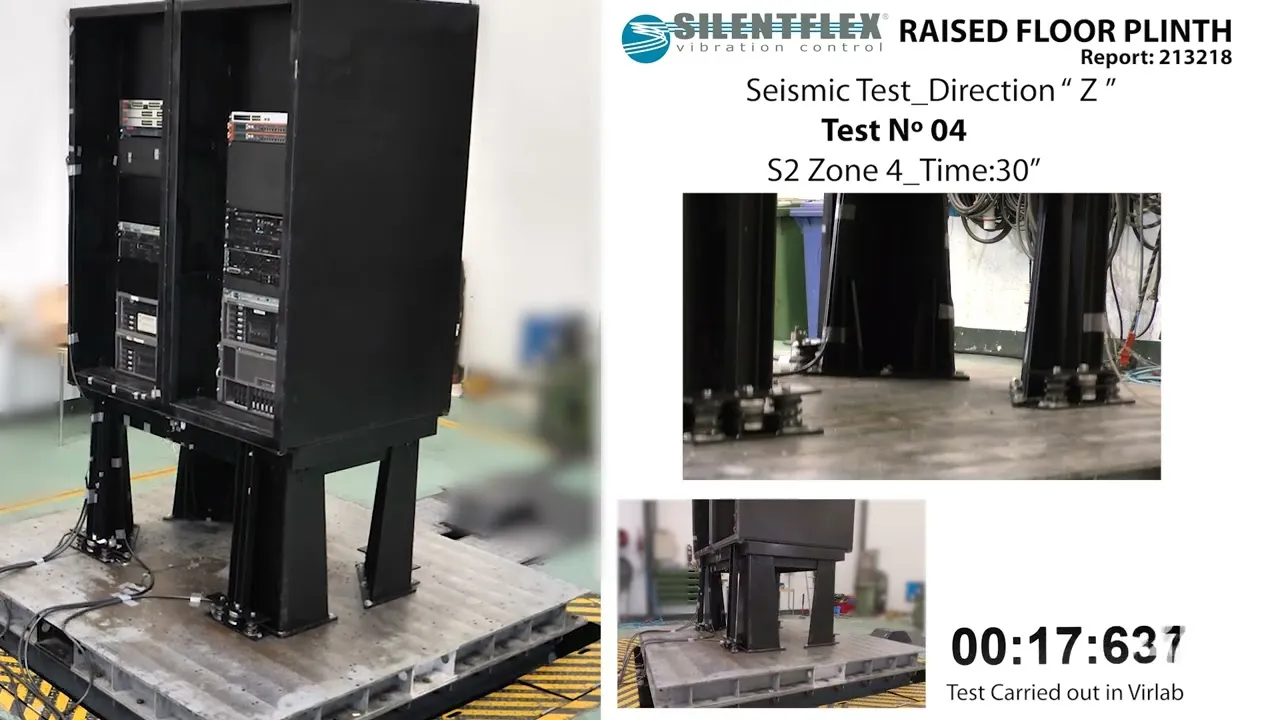
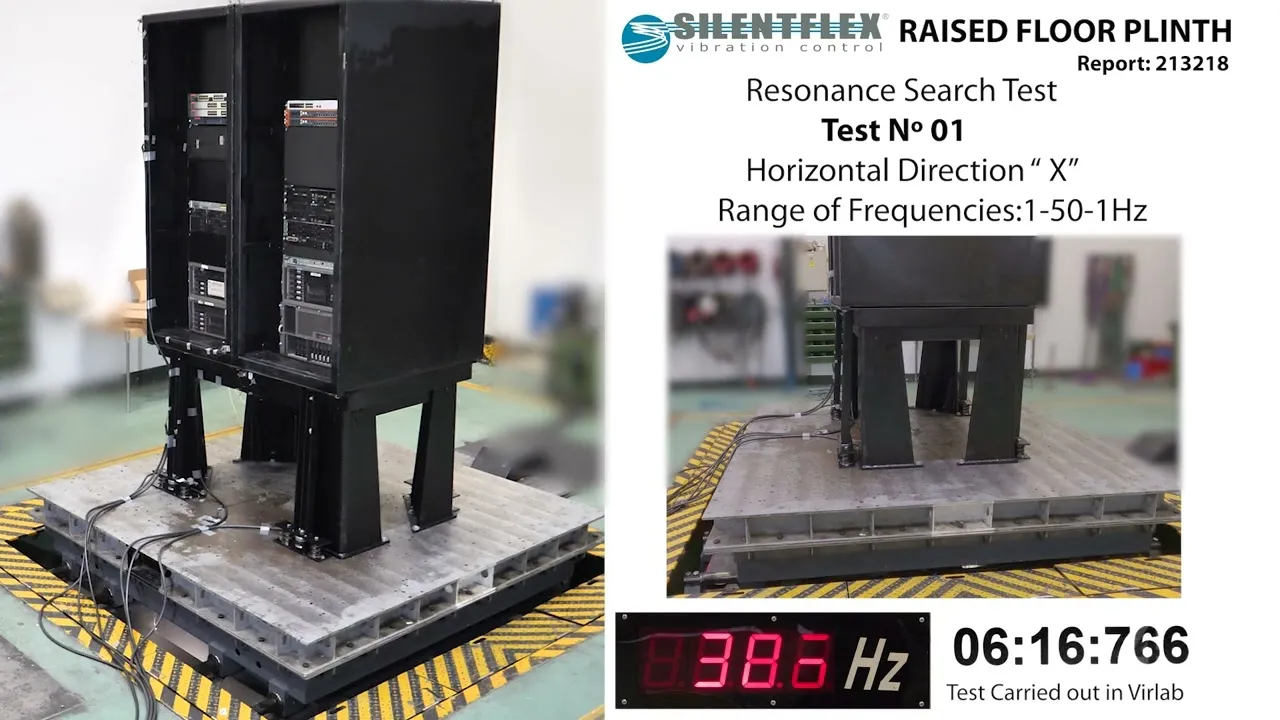
The table plays the Zone 4 synthetic earthquake along one axis for about 30 seconds. The plinth keeps both racks anchored and level while they run.
The table plays the Zone 4 synthetic earthquake along one axis for about 30 seconds. The plinth keeps both racks anchored and level while they run.
A slow sine sweep from 1 to 50 Hz and back finds the natural frequencies of the assembly, before and after the earthquake.
Container Pads under a container data centre with its racks, on a shake table to Telcordia GR-63-CORE Zone 4 (test report 203058).
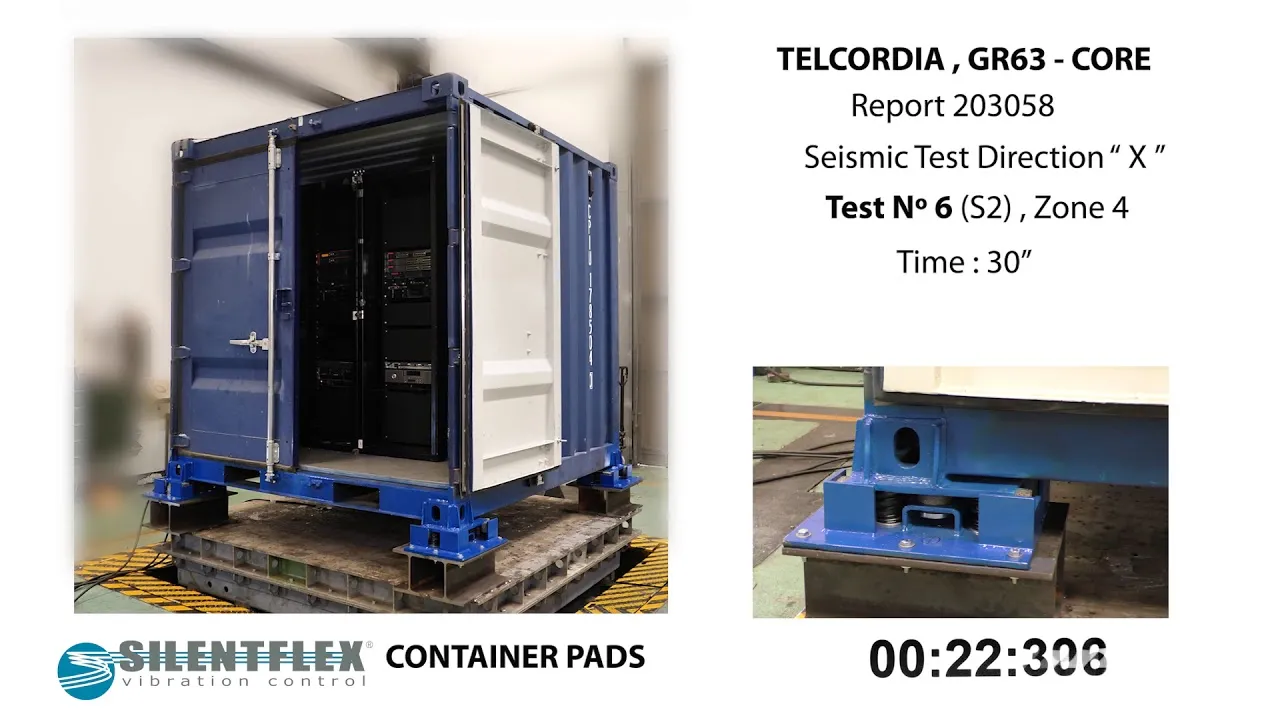
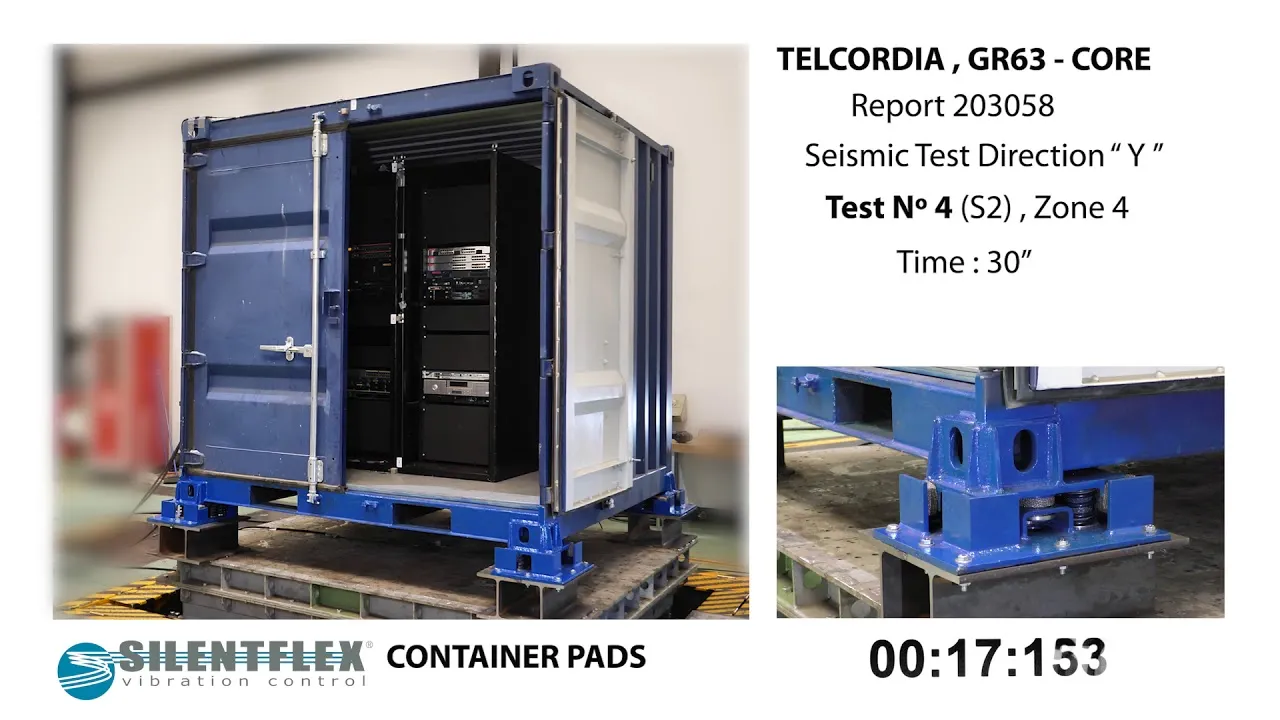
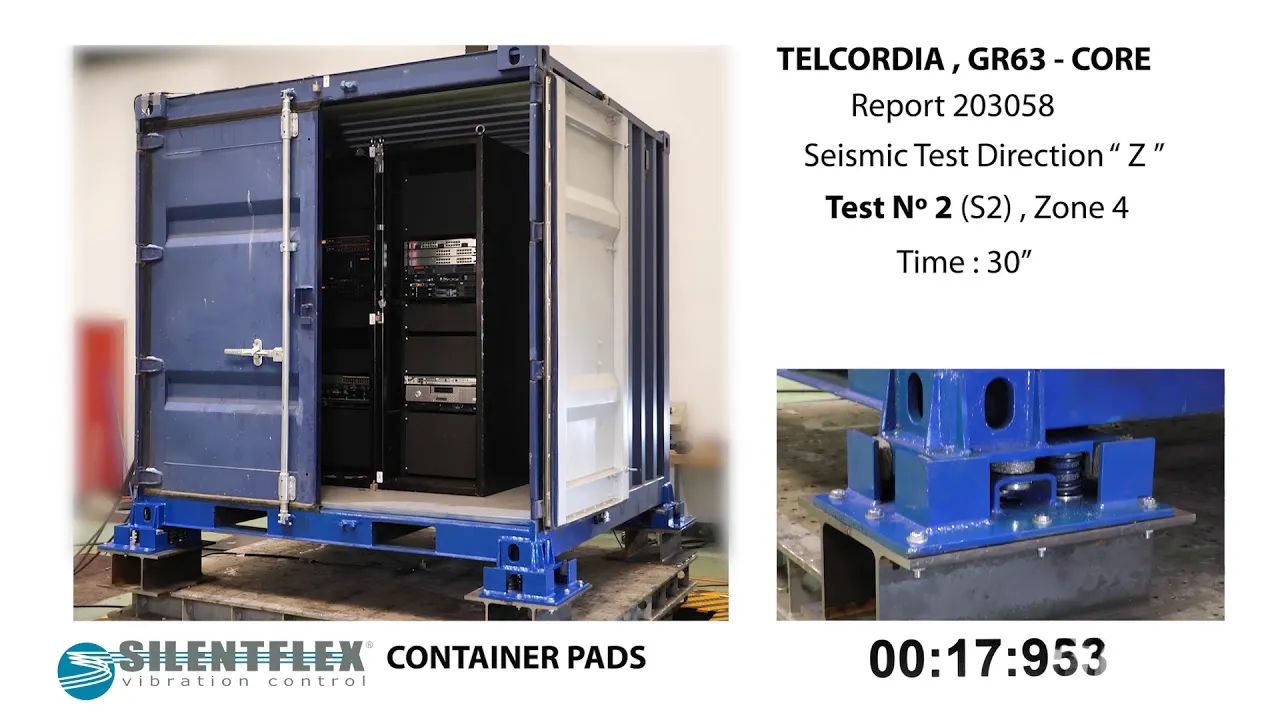

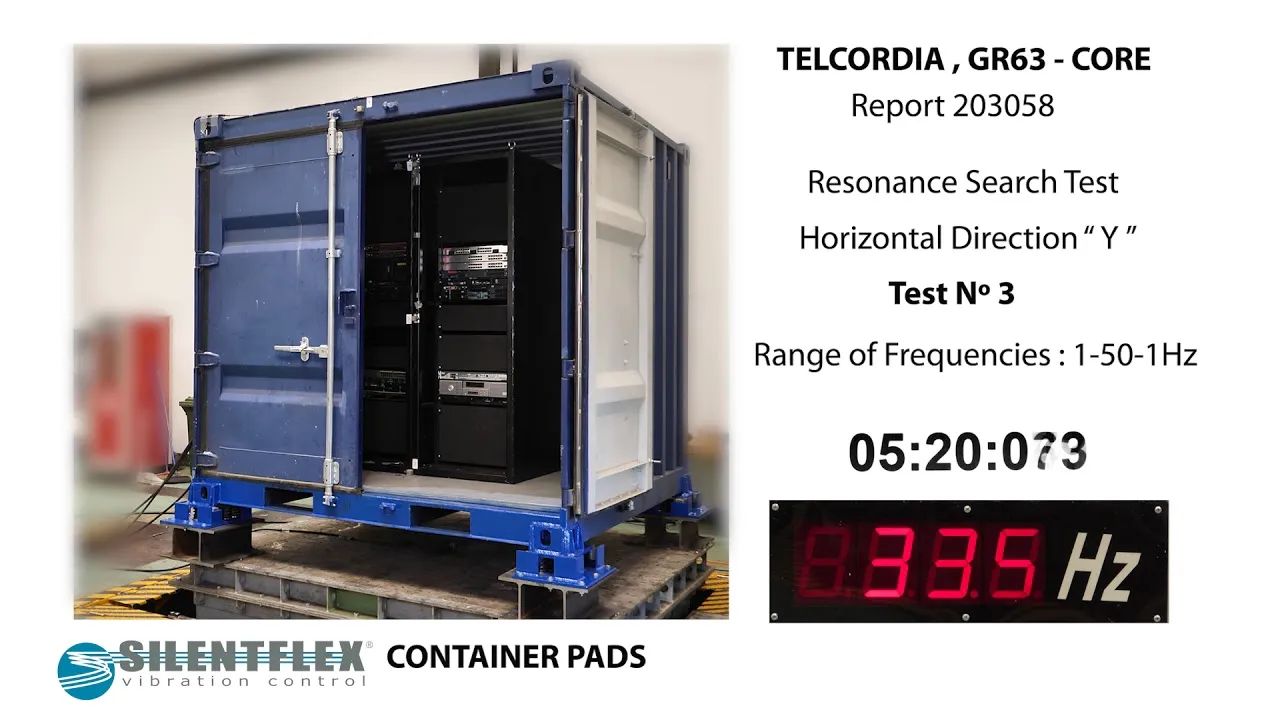
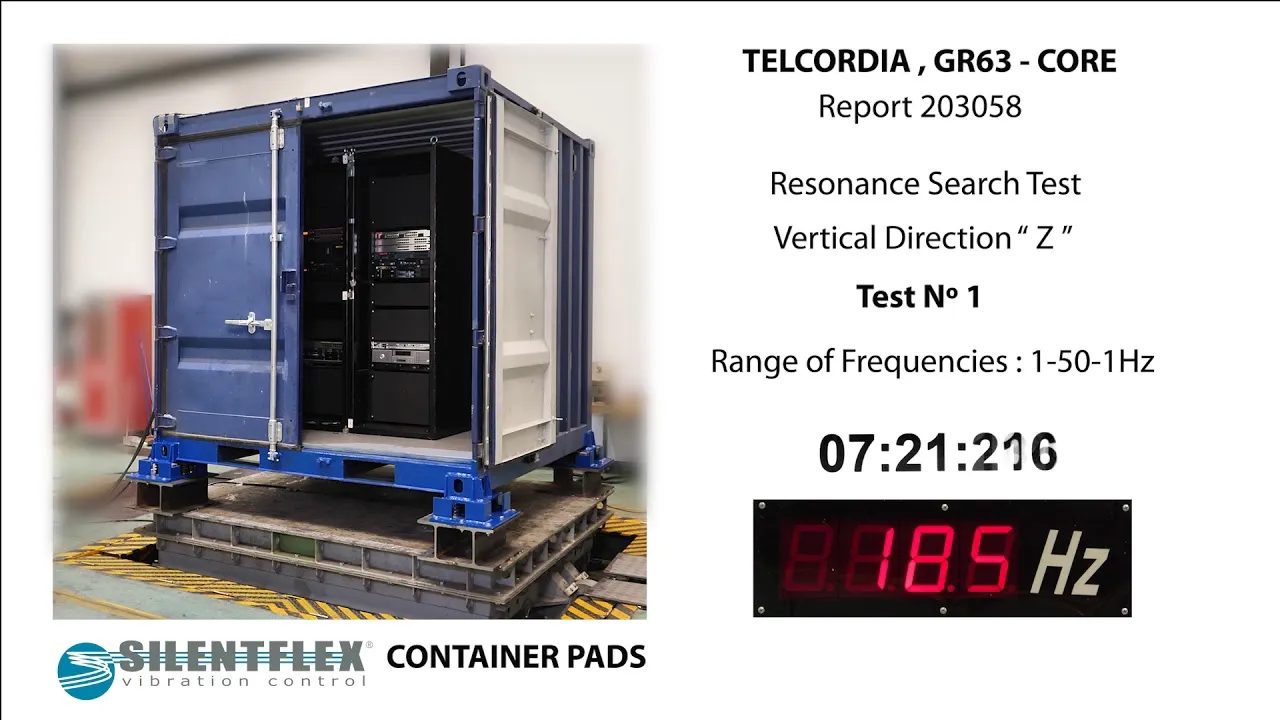
The table plays the Zone 4 synthetic earthquake along one axis for about 30 seconds. The pads keep the container anchored and level.
The table plays the Zone 4 synthetic earthquake along one axis for about 30 seconds. The pads keep the container anchored and level.
The table plays the Zone 4 synthetic earthquake along one axis for about 30 seconds. The pads keep the container anchored and level.
A slow sine sweep from 1 to 50 Hz and back finds the natural frequencies of the assembly, before and after the earthquake.
A slow sine sweep from 1 to 50 Hz and back finds the natural frequencies of the assembly, before and after the earthquake.
A slow sine sweep from 1 to 50 Hz and back finds the natural frequencies of the assembly, before and after the earthquake.
Plays from YouTube in privacy-enhanced mode. Nothing loads from YouTube until you press play.
1Server racks
The problem
An earthquake does not need to knock a rack over to do damage. Peak accelerations above 0.5 g can break disks and make data unreadable, and racks that slide pull their cables out.
What we fit
An all-metal seismic plinth under each rack. Two linked frames absorb vertical and horizontal energy, the rack stays anchored and moves little sideways, so the cables stay connected. Qualified to Telcordia GR-63-CORE Zone 4. Where racks stand straight on the slab, the Non-Raised Floor Plinth takes up to 1,500 kg per rack at 4–5 Hz.
Typical choice
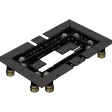 Non-Raised Floor Plinth, seismic plinth for racks100–1,500 kg · 4–5 Hz
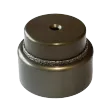 Anti-vibration mounts for racks and data centres100–1,000 kg · 4.5 Hz
Proven in seismic zones: Telefónica (2013), metallic plinths for the main data centre.
The final choice depends on the load per mount, the speed and the environment. An engineer confirms it with you.
2Container data centres
The problem
Containerised data centres and equipment shelters stand outside on the ground and take the full ground motion.
What we fit
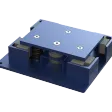
Container Pads: 6 to 14 double vertical suspensions with heavy-duty springs and stainless steel energy absorbers, anchored to the concrete and the container, for 16,000 to 30,000 kg per container.
Typical choice
The final choice depends on the load per mount, the speed and the environment. An engineer confirms it with you.
3Emergency generator
The problem
The generator has to start when the grid fails, often right after an earthquake. It needs isolation from its own vibration and has to stay where it is.
What we fit
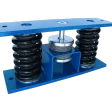
All-metal mounts offered for seismic zones, or spring mounts with retention, so the generator is isolated in normal running and restrained in a quake.
Typical choice
The final choice depends on the load per mount, the speed and the environment. An engineer confirms it with you.
17 products
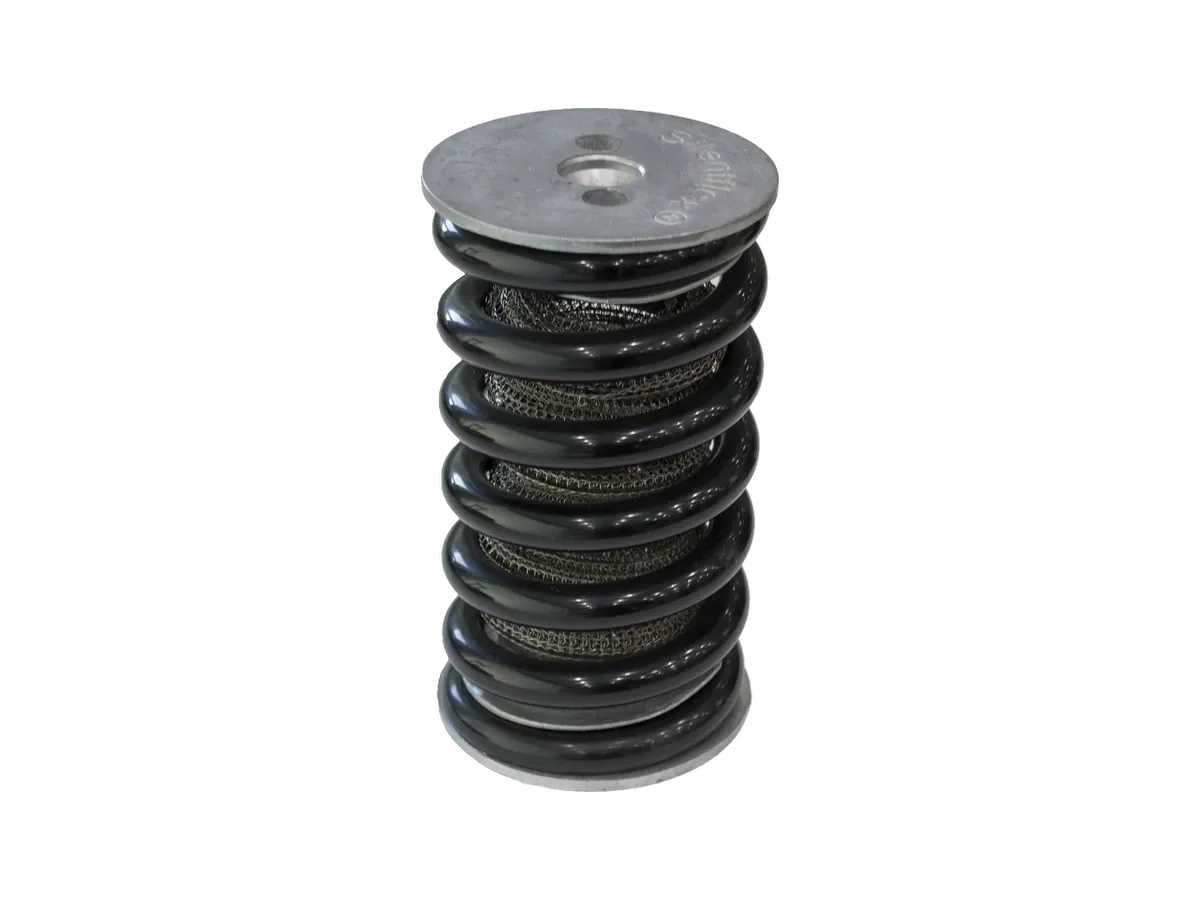
Single anti-vibration springs
- Load
- 5–730 kg
- Nat. freq.
- 3–9 Hz
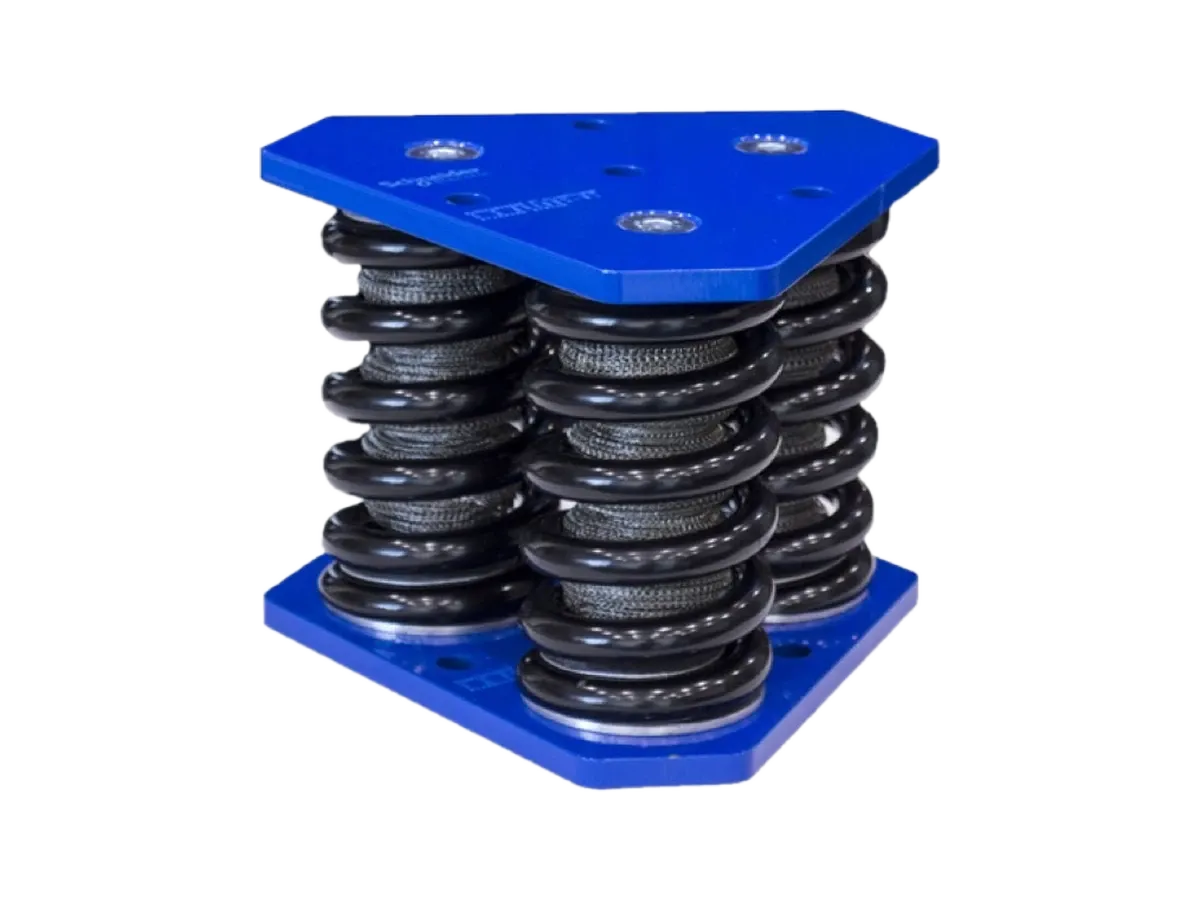
Spring isolator
- Load
- 390–8,760 kg
- Nat. freq.
- 3–9 Hz
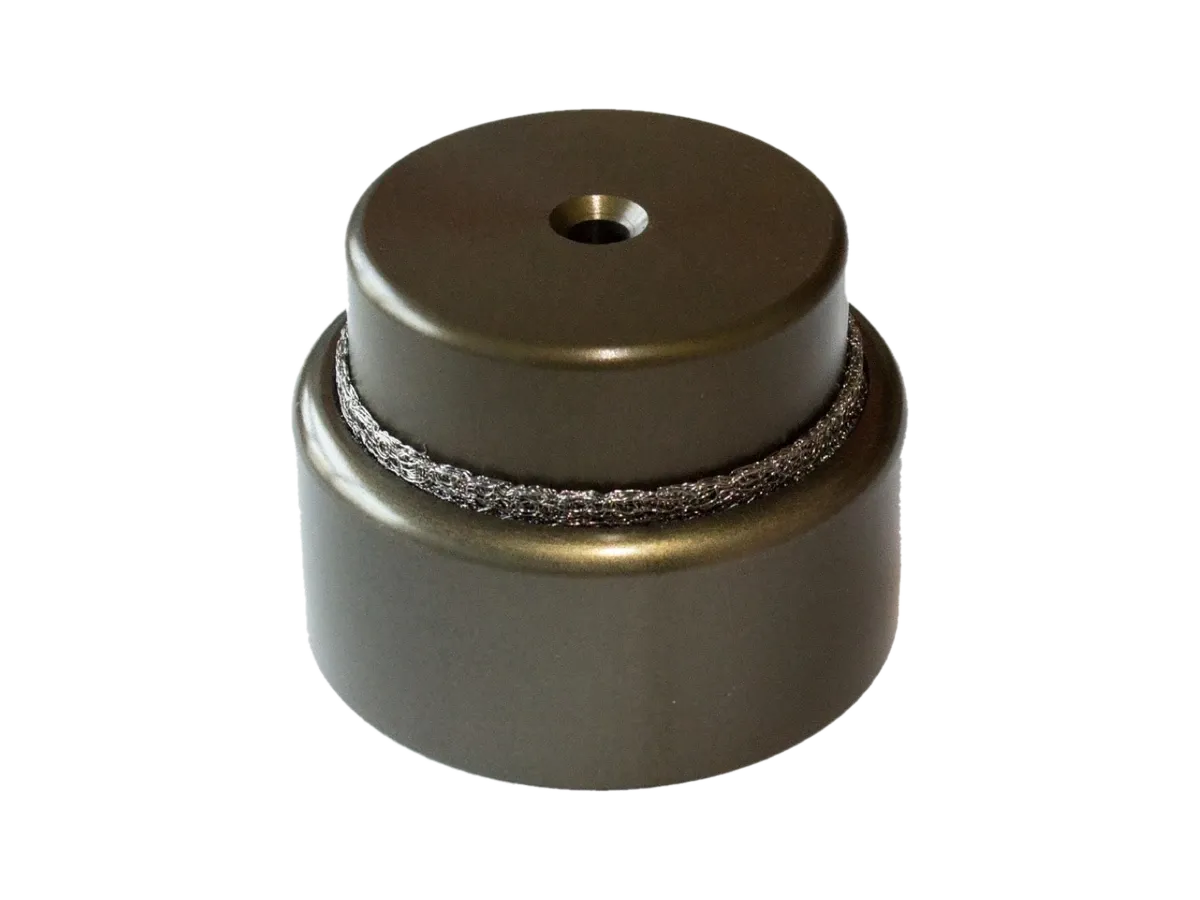
Anti-vibration mounts for racks and data centres
- Load
- 100–1,000 kg
- Nat. freq.
- 4.5 Hz
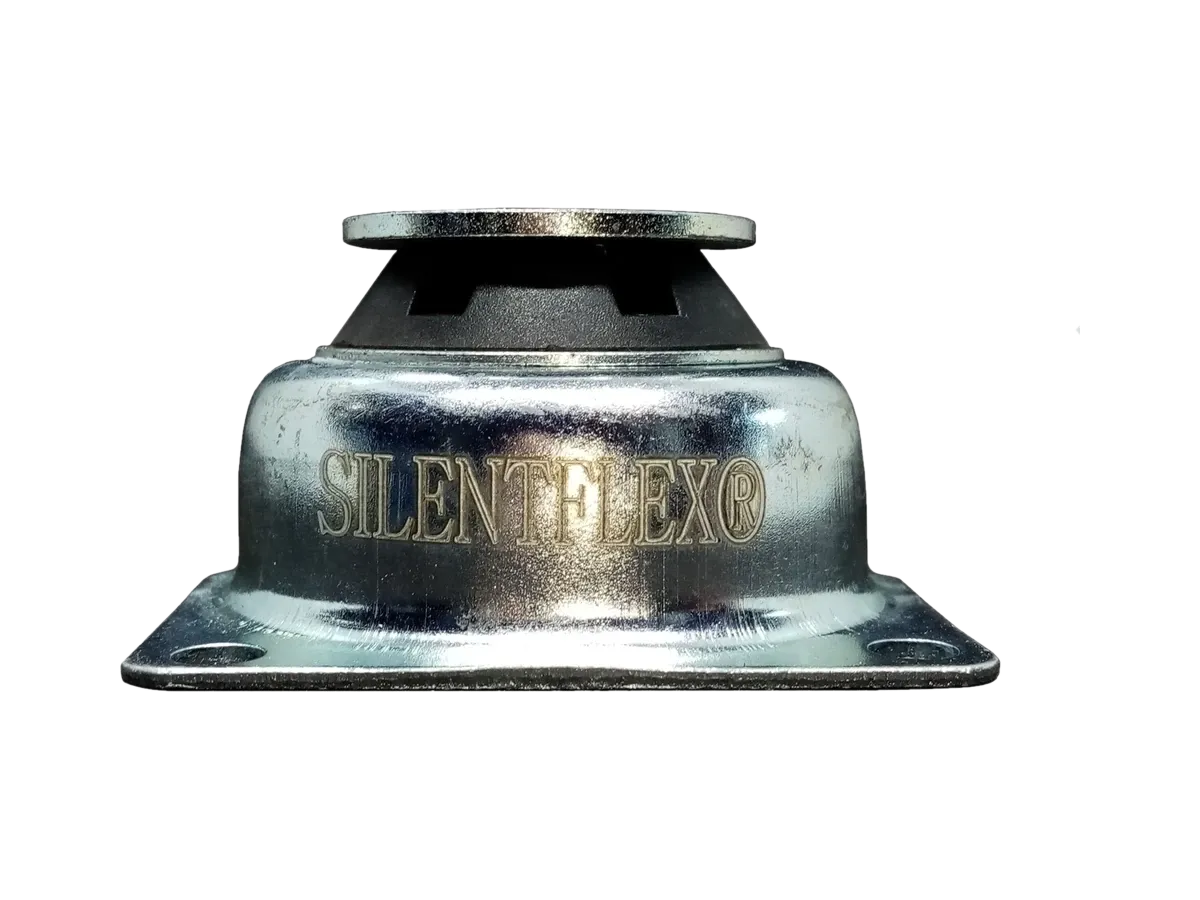
Tension-compression vibration mount
- Load
- 10–70 kg
- Nat. freq.
- 15–25 Hz
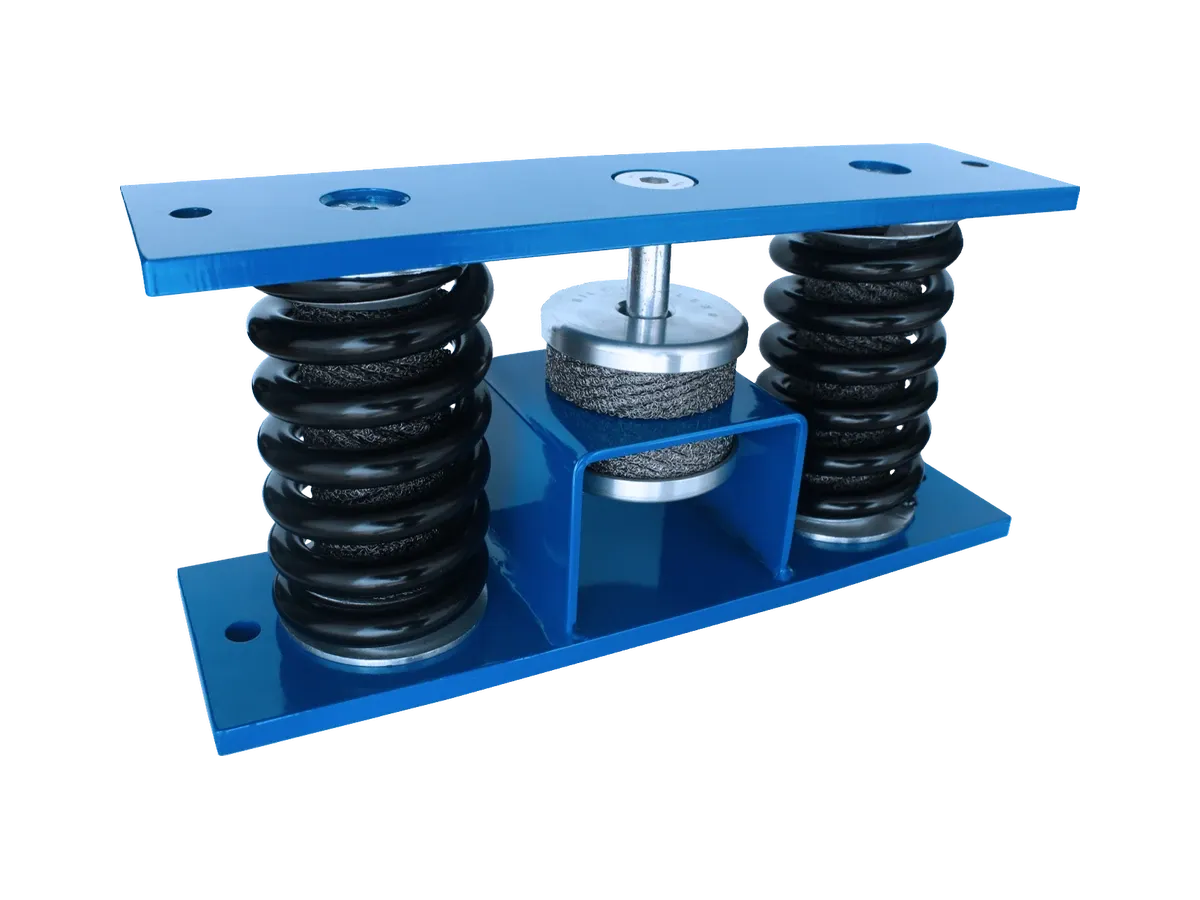
Double springs with retention
- Load
- 80–1,460 kg
- Nat. freq.
- 7–9 Hz

FLEXTRONIC vibration mount
- Load
- 10–224 kg
- Nat. freq.
- 5 Hz

Toroidal vibration damper
- Load
- 1–28 kg
- Nat. freq.
- 9 Hz
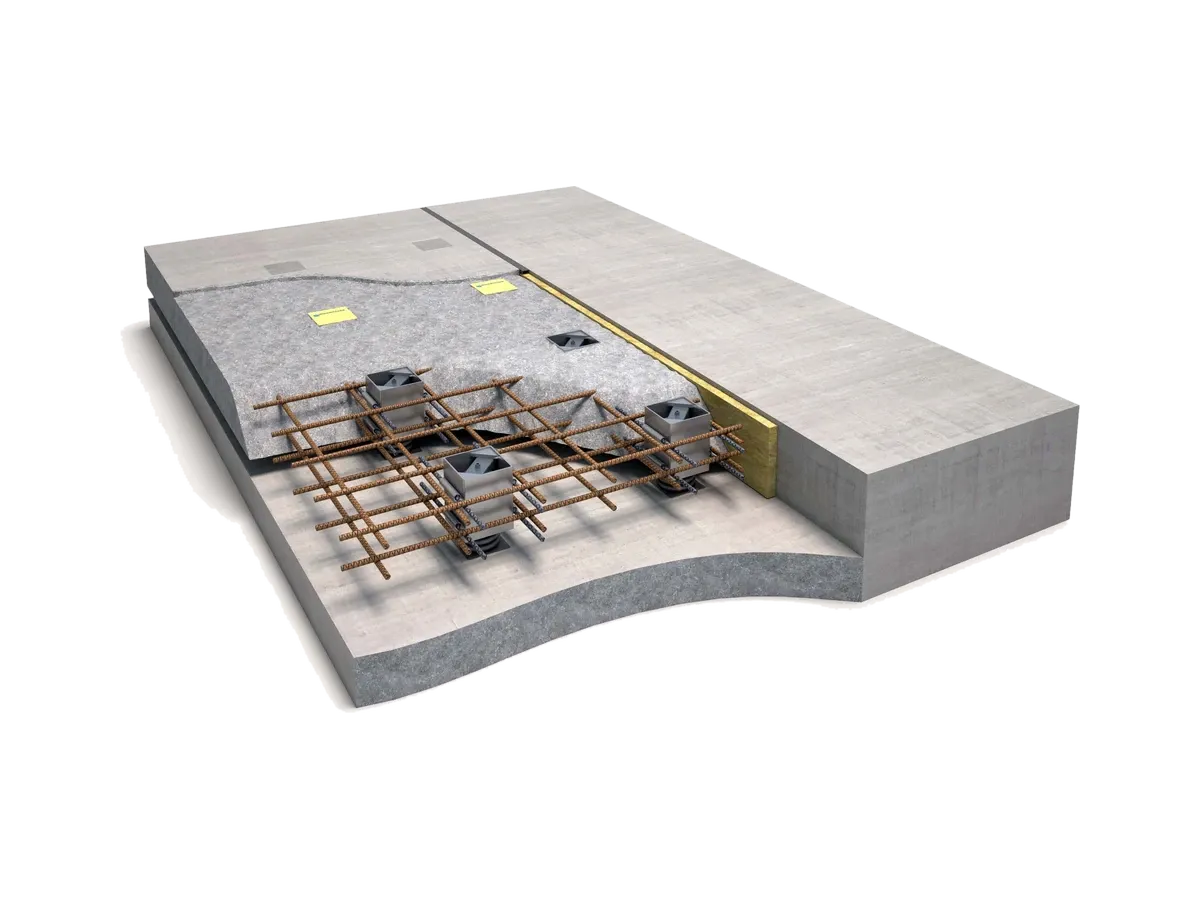
Anti-vibration floating slab
- Load
- on request
- Nat. freq.
- 1–4.5 Hz

Container Pad Seismic Vibration Isolator
- Load
- 100–10,000 kg
- Nat. freq.
- 3–9 Hz
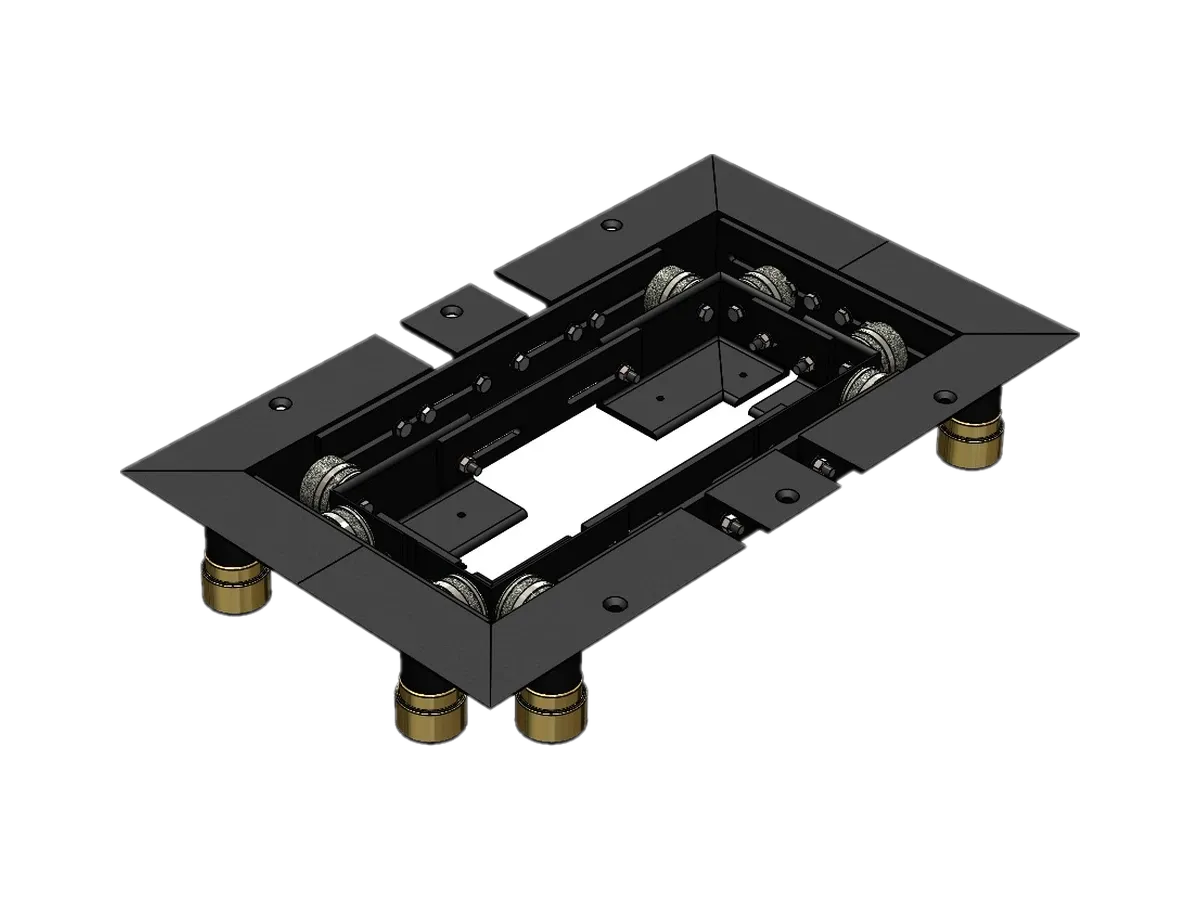
Non-Raised Floor Plinth, seismic plinth for racks
- Load
- 100–1,500 kg
- Nat. freq.
- 4–5 Hz
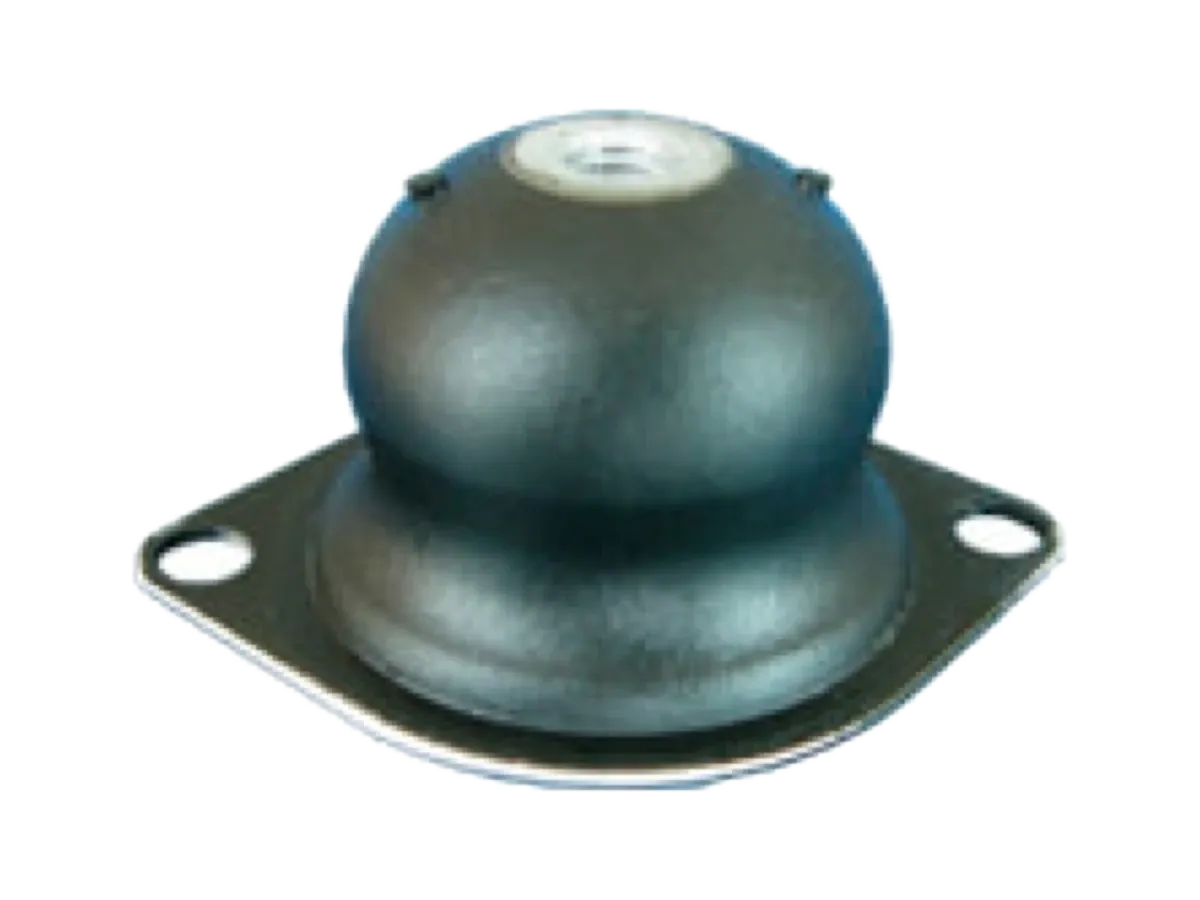
Spherical vibration mount for electronics
- Load
- 1.9–7 kg
- Nat. freq.
- 4–6 Hz
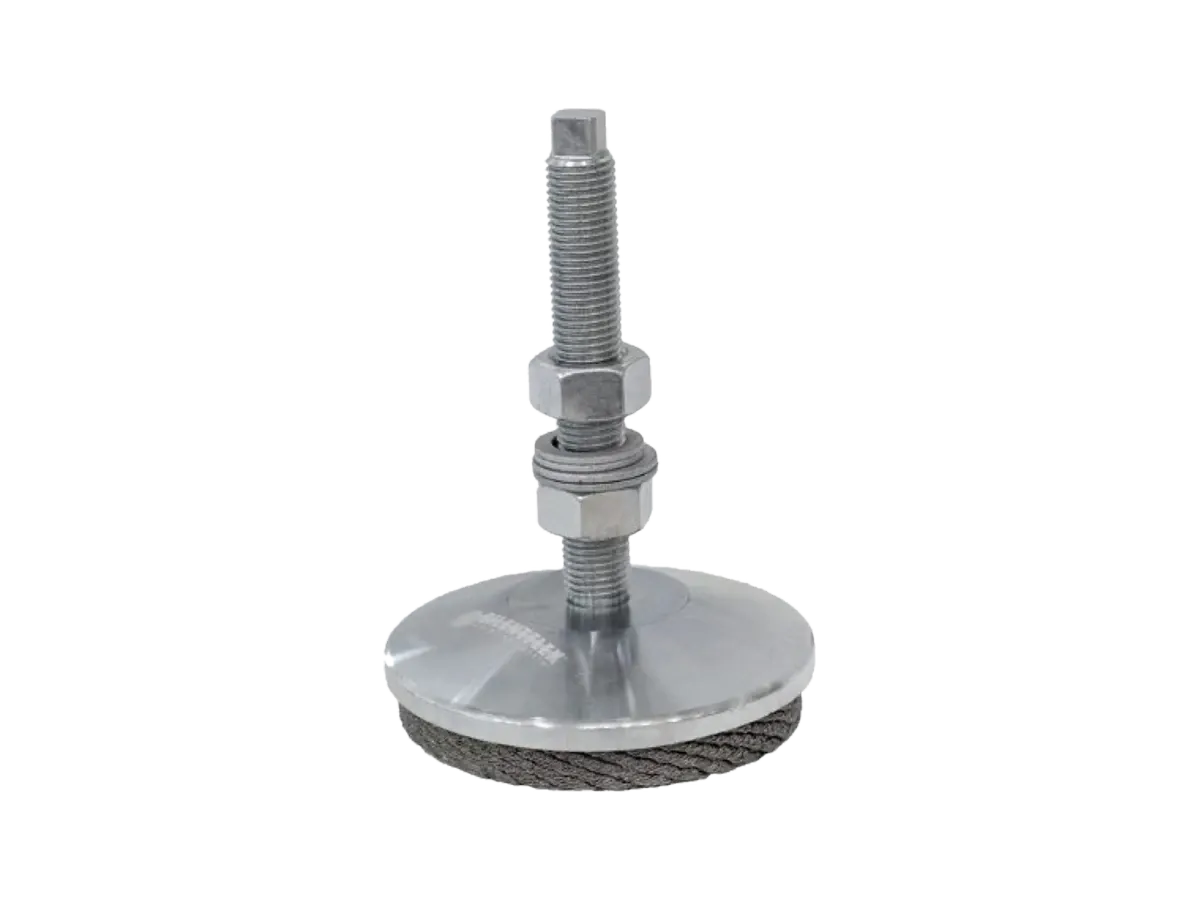
Machine levelling feet
- Load
- 25–7,000 kg
- Nat. freq.
- 15 Hz

Electronics and aeronautics vibration mount 7002
- Load
- 0.7–60 kg
- Nat. freq.
- 6–12 Hz
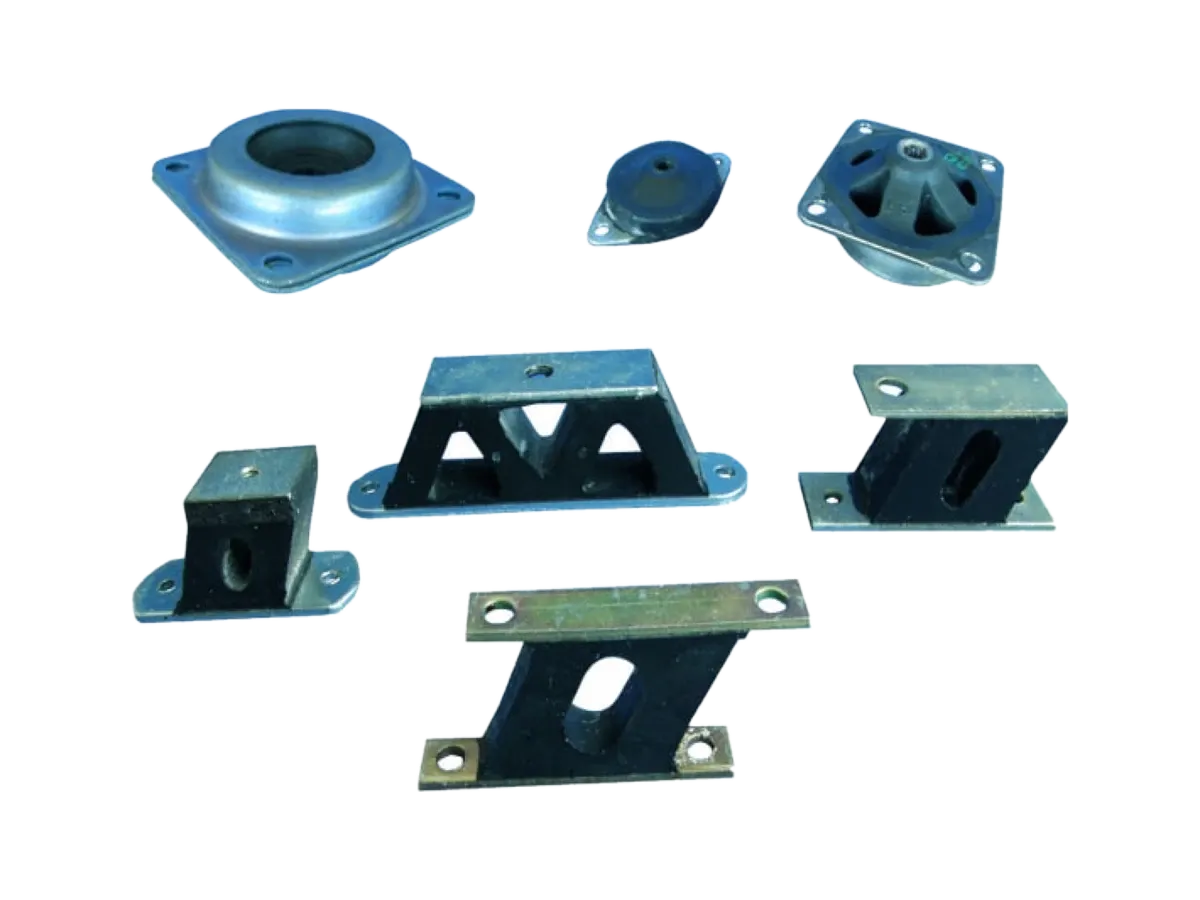
Vertical vibration mounts
- Load
- 2.5–35 kg
- Nat. freq.
- 5–8 Hz
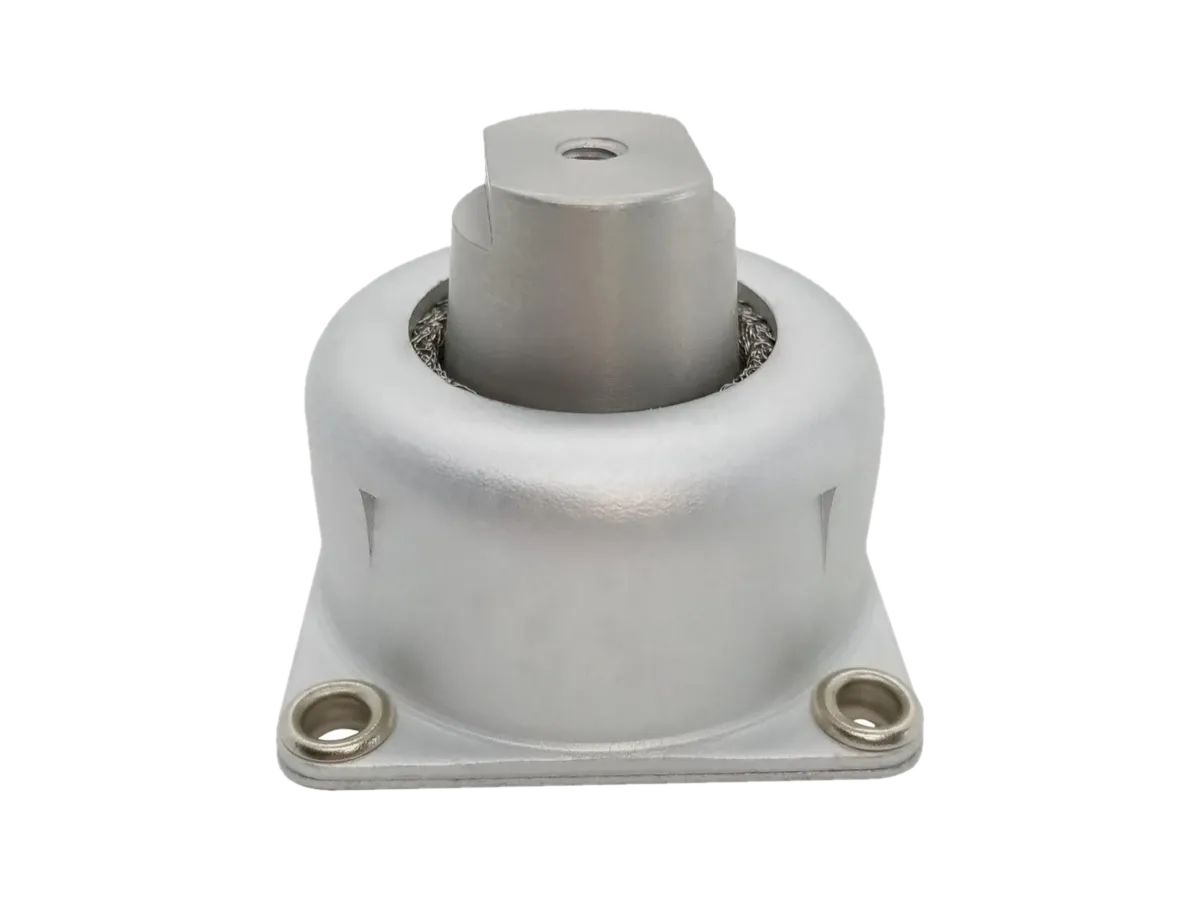
Electronics and aeronautics vibration mount 7001
- Load
- 0.3–4.5 kg
- Nat. freq.
- 6–12 Hz
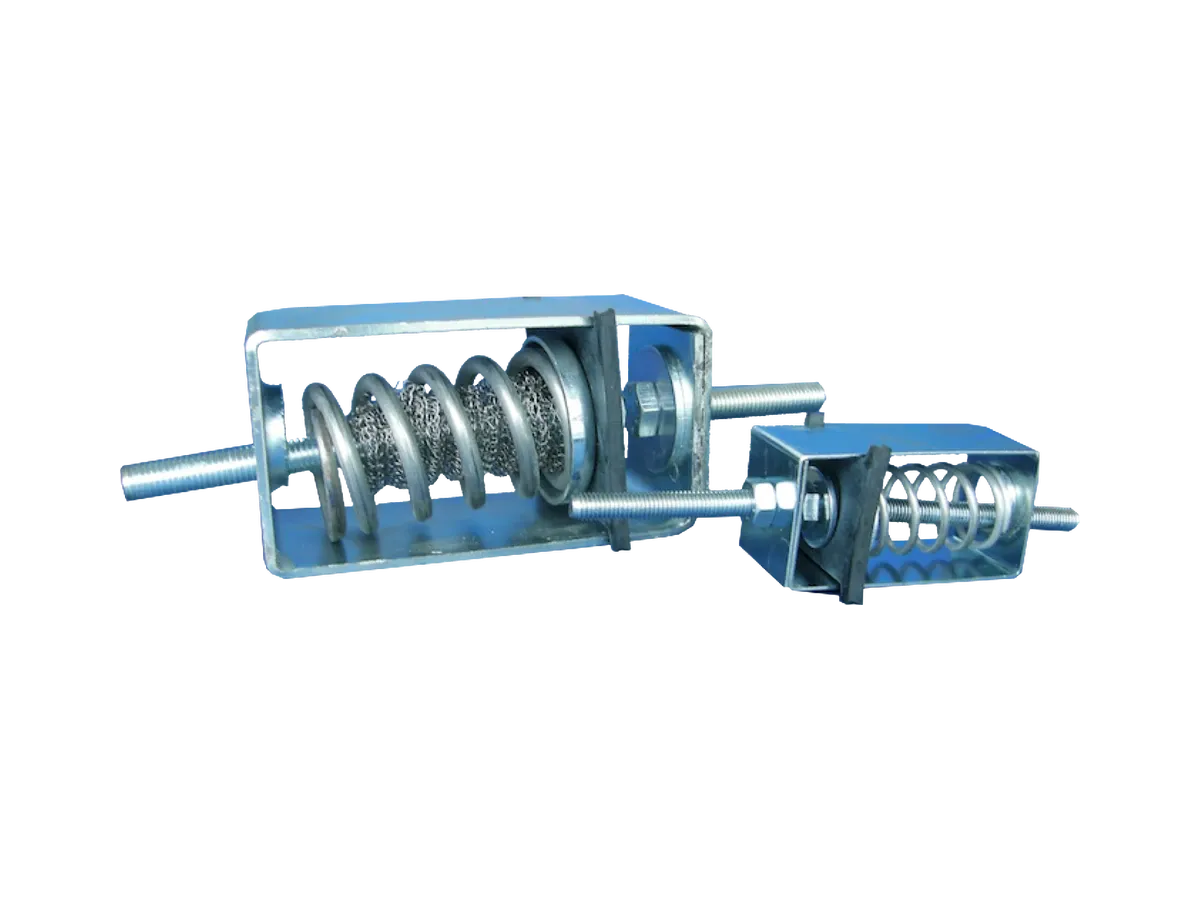
Shock absorber type B
- Load
- 5–420 kg
- Nat. freq.
- 3–5 Hz
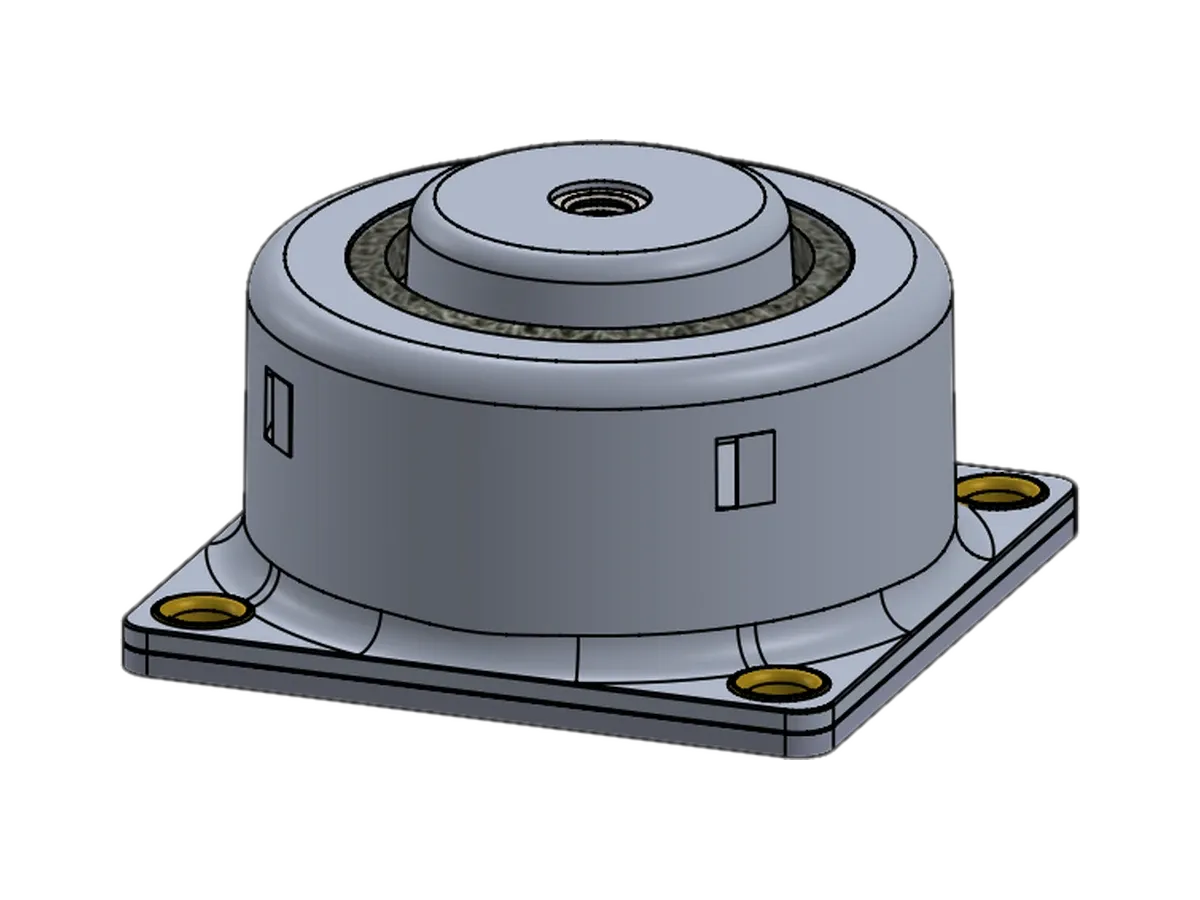
Vibration mount 1202 / 914
- Load
- 1–60 kg
- Nat. freq.
- 15–25 Hz
By equipment
Pick the machine or equipment you want to isolate and see which mounts are used.
Not sure which mount you need?
Our calculator tells you in 30 seconds.